

Sewing with flannel - All the tips you need to know before you start a flannel sewing project! (Also, scroll down to check out my quick test of a flannel piece. And what I did all wrong!)
This post is part of the ApleGreen Cottage learning-to-sew series. Check out all my sewing tips here, and our popular free fleece hat pattern for the winter, as well as the super easy neck gaiter pattern every beginner can sew.
Table Of Contents
A few new tutorials for sewing with flannel are coming soon. Sign up for our mailing list HERE so you don't miss out on them. Packed with easy sewing projects!
Sewing With Flannel
What is flannel?
Flannel is a loosely woven fabric that has been brushed for softness, so it has a bit of a nap on one side (sometimes on both). It feels soft against the skin. Since it's warm and soft, it's a staple in fall and winter wardrobe.
Is Flannel Cotton?
Originally flannel was made of wool, now cotton is very common, as well as other materials and blends.
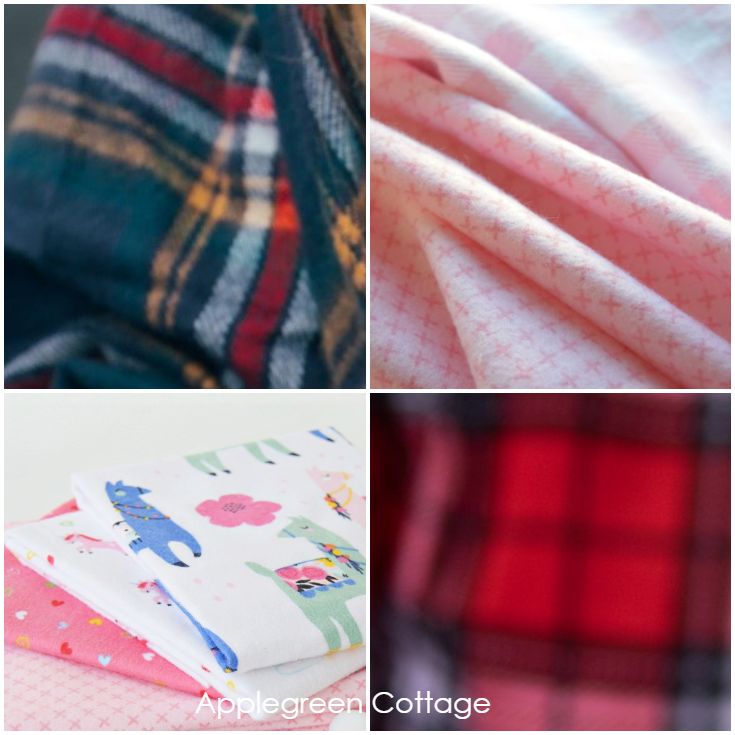
The typical pattern? Plaid. Most often, flannel comes in a multi-color pattern of vertical and horizontal stripes. Buffalo check in red and black, anyone? But there are tons of other prints available with flannel too! Scroll down to check out some of them (links are under individual photos).
What to sew with flannel?
If you've been asking yourself what to sew with flannel, here are a few ideas for you: flannel is the perfect cuddle fabric for
- flannel baby blankets
- no-scratch mittens made with flannel
- accessories: flannel scarves!
- reusable diy makeup pads
- all things baby: flannel baby bibs (use this free pattern!),
- flannel bandana bibs (Here's a free pattern too),
- flannel burp cloths (you can use my pattern here)
- Where I live, we keep sets of flannel bedding for the winter: flannel sheets and flannel duvet covers, and envelope pillowcases (Easy To Sew + BEAUTIFUL!!)
- You can even make flannel pillow covers for your sofa (easiest pillow cover how-to HERE)
- Apparel: flannel shirts are probably a staple in your fall wardrobe (buffalo plaid shirts, anyone?).
- Make flannel pajamas for Christmas!
- Apparently, flannel is great for quilting once you master the basics and the quilting cotton. (Flannel quilts look gorgeous! Just looking at photos of flannel quilts makes me want to stay in and get a cup of cocoa!!) - but please get advice from a quilter. I have never quilted with flannel.
- Last but not least: little crafty things like flannel hand warmers, and those cute flannel coffee cozies!
A few tutorials for sewing specifically with flannel will be published soon here. Keep tuned to see them, or join our mailing list HERE. Packed with easy sewing projects!
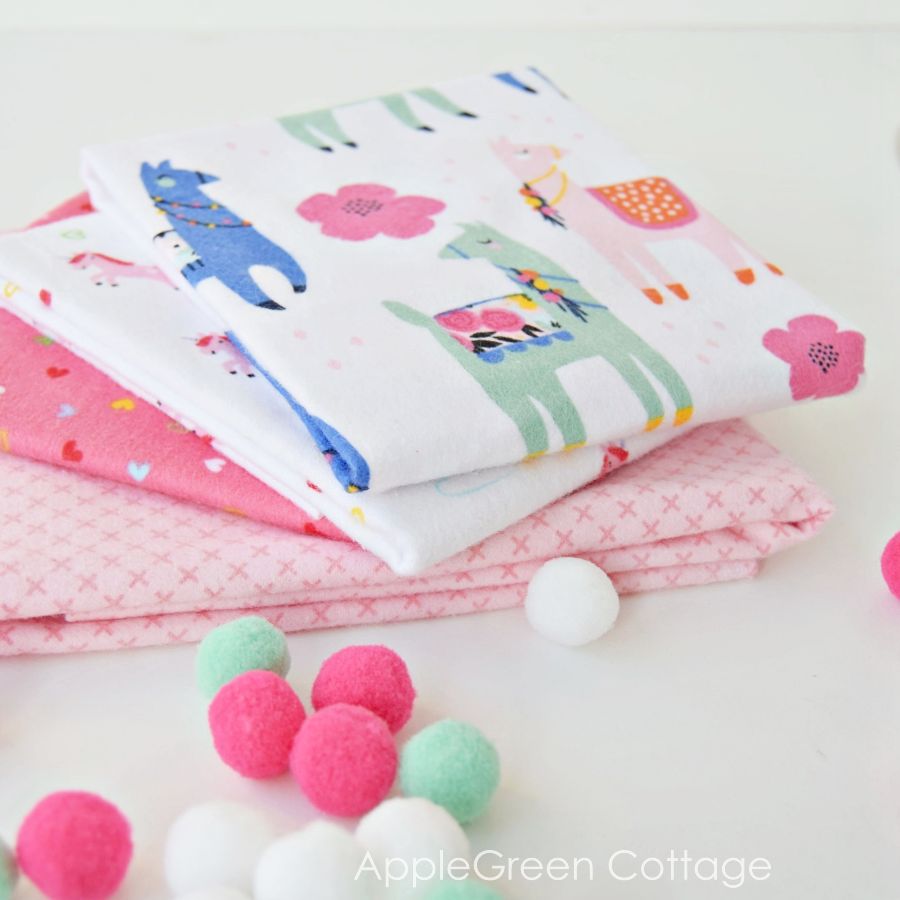
This flannel is from Riley Blake Designs - so soft! You can get the unicorn prints HERE.
Right now, I wanna go and make at least one of each from this list. Or ten! But I'll be a good girl and finish this post first, so you can make a gazillion of cute things with flannel yourself, too. So, let's start, first things first:
Buying Flannel
What to consider when buying flannel?
Things you need to know when you are buying flannel:
1- Buy ⅛ up to ¼ yard more than you need. Buy a bit more than you need, for two reasons:
- One, because flannel will shrink. See below for my test results. (And what I did wrong!) Expect something between 1" up to 4" (3% - 11%) of shrinkage: the lower the quality, the higher the shrinkage.
- Second, all flannel will fray, even the highest quality one. If you'd like to keep fraying to the minimum, put it in a mesh bag when pre-washing. Some people would zigzag the edges before pre-treating to keep fraying close to zero - for when you need every little bit and thread of your flannel piece.
2 - Know what you buy: better-quality flannel feels denser, and not just that: when you take a close look at the weave, you'll notice it's napped on both sides - the softness! The cheaper flannel will shrink more, and deform even easier because of the looser weave.
Tip: How To Prevent Flannel From Fraying
One of AppleGreen Cottage readers, Debi said she uses her pinking scissors or wavy rotary cutting blade on the edges and clip the corners off about ½" before washing. (Thank you, Debi!)
And Mea says she does a running stitch all the way around the flannel before washing, then wash in hot water and dry in a hot dryer - twice, to make sure it won't shrink anymore - and it stays the same softness as when it arrived. (Thank you, Mea!)
What brands have good flannel?
Popular flannel brands include Moda, Connecting Threads, Maywood, Riley Blake Designs flannel - soo soft!
Where to buy flannel?
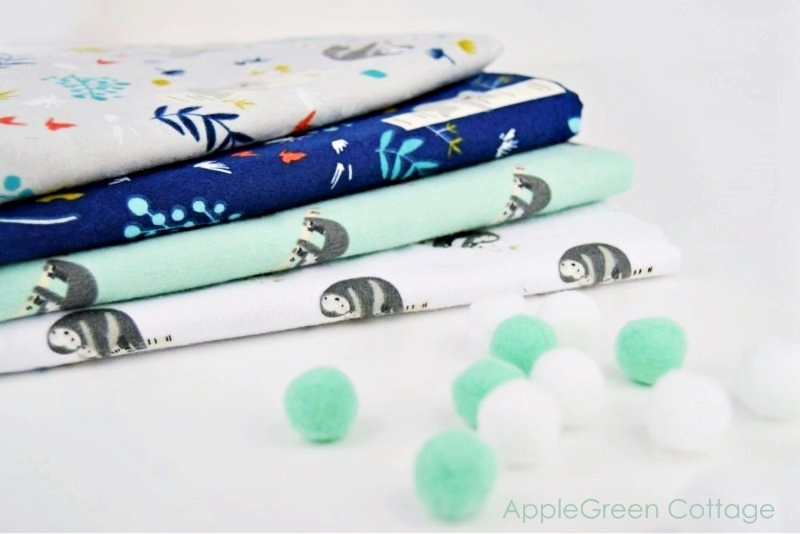
If you don't want to leave your house at all, check it out online. If you'd like to browse for ideas, here are prints by Riley Blake Designs.
Does Flannel Shrink?
Definitely yes. Way more than quilting cotton.
This is why a good way to get flannel is to head to your favorite local fabric shop. If buying in chain stores, select carefully. You generally don't want the low-quality flannel. It frays more, shrinks more, has a looser weave and it's not as soft to the touch - and it retains less warmth.
What to do BEFORE you start sewing with flannel?
1 - Prewash or not?
There will always be differing opinions on prewashing flannel. This is what I've learned so far, also from my mistakes (see the bottom of the post) :
A- Not prewash at all.
Just fine for projects where you use JUST flannel, no other types of fabric involved, and IF the finished size does not matter as much. This might be the case with all-flannel coasters, hand warmers, maybe flannel throws and blankets, oversized infinity scarves and the like. But bear in mind there could be some puckers when you wash it after an item has been made. If you can live with that, go ahead, it's not the end of the world.
B- Prewash - gently!
That means pre-wash on a delicate cycle, using a low temperature. With a delicate cycle, there will be less rubbing and you'll prevent the flannel from piling. Shrinkage will be minimal.
Given a choice, I prefer B to A, so I'd prewash on gentle cycle even if not necessary. This way, I see the project won't end up (much) different from what I want it to.
This is the result: photo of my flannel from Riley Blake Designs in 'Joey Main Gray' - AFTER prewash:
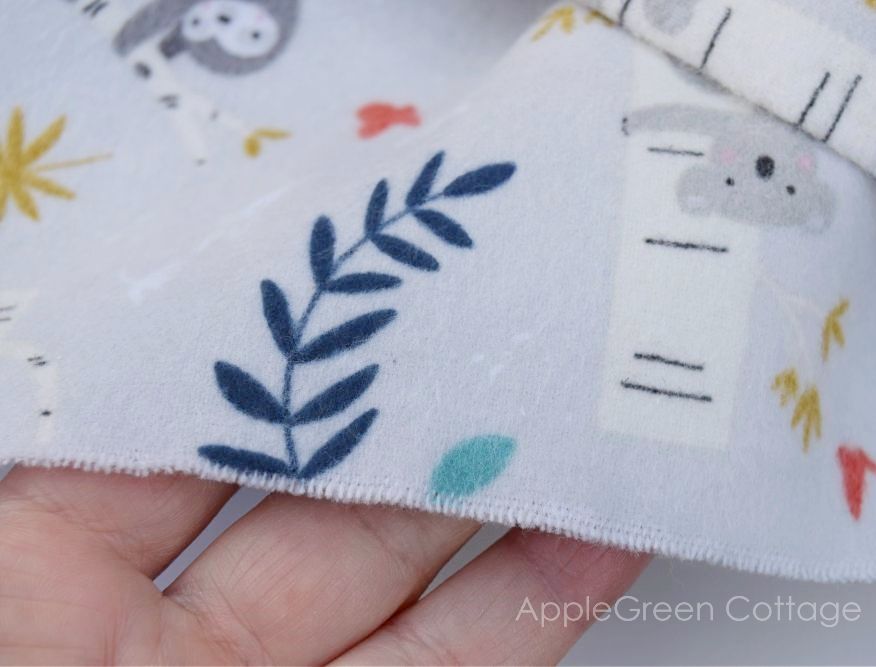
Prewashed using a gentle wash cycle on low temp and tumble dry low - no pilling at all, negligible fraying, 1" per yard shrinking only. Colors stable and not faded. Still soo soft! Perfect!
B-Shrink it before you sew it.
This means wash on a delicate cycle but on high temperature. As mentioned before: delicate cycle means no pilling. With heat level cranked up, your flannel will shrink as much as it's intended to, and you won't need to worry about shrinking later.
Always pre-shrink and prewash flannel in these cases:
Prewash and SHRINK before you sew always when sewing:
- A - garment that needs to fit. And that's pretty much all garment. Unless you're after that oversized buffalo-check flannel-shirt look of the '90s. I wore that one at least 3 sizes too large, so I wouldn't even have noticed the shrinkage 🙂 But my high school style issues aside, back to flannel:
- B - Anything else that needs to fit (kinda obvious)
- C - If you're using any other types of fabric in the project in addition to the flannel. Always pre-shrink flannel. You don't want your beautiful, quilting-cotton-backed baby blanket to end up all crinkled, puckered and uneven! (Ask me how I know. Ha.)
- D - good to preshrink: anything you know is gonna be washed often and will be on heavy-duty. Baby bibs and all the burp cloths, I see ya!
Please note that fabric manufacturers will often advise you to wash and dry on sensitive cycle AND LOW temperature, but this way the shrinkage will happen gradually, especially with the baby items like bibs, burp cloths, baby blankets - these get dirty and need a thorough wash.
TIP: Prewashing also removes excess dye, prevents color bleeding, and reduces skin contact with leftover dye residue.
How To Dry Flannel?
Use a sensitive drying cycle. Set the tumble dryer to a sensitive cycle, and the flannel will come out so fluffy!
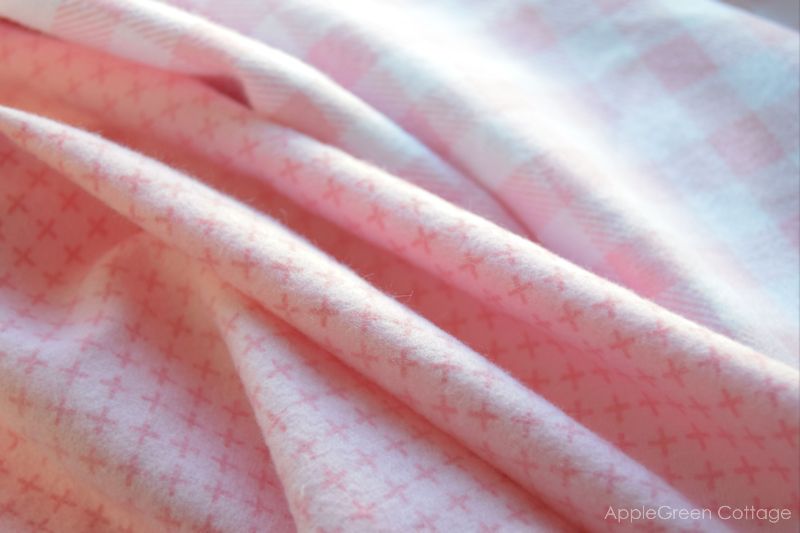
This print is called 'Kisses Baby Pink'.
How To Press Flannel
Before you even touch your flannel with your scissors, press it flat, making sure not to deform it. This means press - up, press-up. Don't move the iron around while pressed firmly onto the flannel.
How To Sew With Flannel
And finally: sewing. Not many rules here:
1 - Stronger Sewing Needle.
Use a stronger sewing needle. Flannel is a bit thicker than quilting cotton, so you'll want to use a stronger needle. I often use a jeans needle for anything that's thicker than quilting cotton and for layers. (So yeah, jeans needle if you're a nerd.) Properly, I should suggest using a 90/14 sewing needle. An 80/12 should work for cotton flannel, too. Most importantly, it needs to be sharp, so consider changing the sewing needle often.
2 - Stitch length For Flannel Sewing
Use a longer stitch length than regular, I use a stitch length of 3 - 3.5.
3 - Wider Seam Allowance
Use a wider seam allowance to accommodate for fraying. Half an inch (1.3cm) is a good one!
4 - Walking foot is a good option For Sewing with flannel
Some people recommend using a walking foot for flannel. I use my regular foot when sewing with flannel only. So far, I have had no issues with layers shifting when sewing, but if you do, a walking foot will help. However, sewing with a mix of flannel and fur, or flannel and minky, that's an entirely different beast. But all the issues usually arise from minky and fur, not flannel. Flannel is generally a well-behaving material. Except for fraying, which brings me to the next point:
5 - Prevent Flannel from fraying on finished items:
Always finish the edges of your fabric so the seams won't unravel: serge all the raw edges on the seam allowance, or use a wide zigzag. The best, however, is having your project fully lined, no exposed edges.
I TESTED a piece Of Flannel!
- And this is why I'll never use high-spin and regular cotton wash cycle With Flannel again.
Here's a test I conducted on a high-quality flannel piece (photo below). Full disclosure, the manufacturer recommends machine washing it on cold and tumble drying on low.
But I wanted to see if 'delicate cycle' really matters as much. And how much a yard of flannel would shrink if I use maximum heat, to make sure no later shrinking takes place. I put it through a cotton wash cycle - high-spin, high-temperature, and then through a normal, high-temp dry cycle. Not gentle at all, and not what the manufacturer advised.
Test: High-temp wash cycle, high spin, tumble dry on high temp.
Result: I will not do that again.
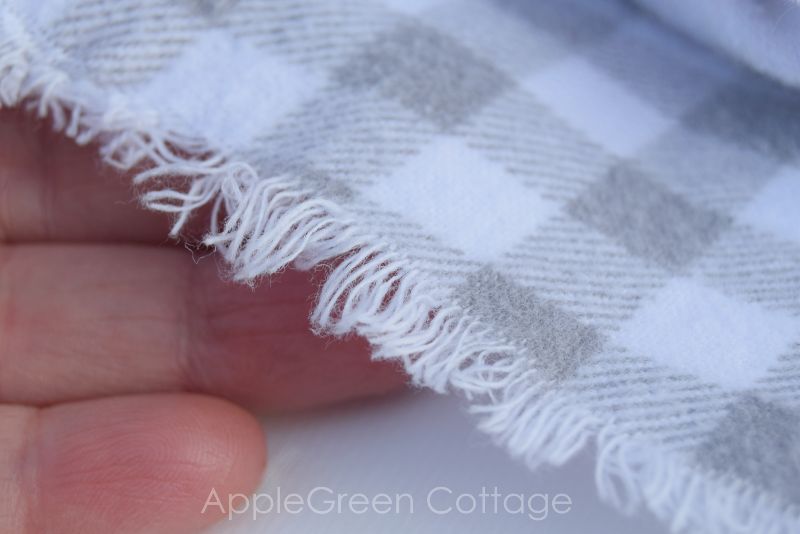
Result: The flannel only shrunk by 3" per yard (8%), which is not a lot for flannel, and the fraying was ⅜ inch (1 cm) only - despite the really harsh treatment! I am able to use it, but it doesn't look the same. It went from 'heavenly soft' to 'OK'. There was some pilling, not much, but it would look ugly if the flannel had a dark print, and if it were of lower quality. Who would want to do that to a beautiful piece of flannel!
Lesson learned: When pre-shrinking my flannel yardage, I'll want to both WASH and DRY on SENSITIVE cycle - just use high temperature to preshrink, so my finalized product won't. Mmmkay?
Also, if I were ready to put more of my flannel, meaning pieces from several different manufacturers through this, the test would gain more validity. Plus document the temperatures, the shrinkage %, the thread count, taking photos of before and after, and probably more. Well, let's say I'll leave that to someone else, less faint-hearted than me. I'll be nice to my flannel from now on.
More questions Answered
Heat can break down fibers more quickly, so wash flannel in warm water rather than hot. Use a gentle cycle, as a more aggressive spin cycle can cause more friction.
One of the readers suggested to place it in a cotton pillowcase pinned shut when washing it. After washing, remove it from the pillowcase and dry it on high heat. This should prevent it from losing its softness while ensuring it shrinks fully. (Mea thank you!)
To prevent flannel from pilling during prewashing, wash the flannel on a delicate or gentle cycle to minimize friction, using a mild detergent to prevent damage to the fabric. Also, skip fabric softenersas they can sometimes contribute to pilling by breaking down fibers.
Using a sharp needle, and slightly stronger one - e.g. a 90/14 size, and polyester thread can help prevent skipped stitches and ensure durable seams.
Try a flat-felled seam - here's how to sew a flat-felled seam. It works great on flannel garments - finishes the seams and helps retain the garment integrity by helping to prevent it from stretching.
How To Use Flannel in other Ways?
Bonus tips:
- Save all your flannel scraps! They make super soft stuffing for handmade toys, better than regular cotton.
- And if you ever run out of your usual interfacing/stabilizer, you can often use a piece of flannel as interlining instead. So handy for sewing little zipper pouches and alike!
Hope this helps you if you're new to sewing with flannel. It takes a bit more work than with quilting cotton, I admit. But bottom line: super cozy, soft and warm. Who wouldn't want that!
Let me know if there are any other tips you follow when sewing with flannel, I'd love to hear them all!
Save For Later:
Want More Free Patterns?
Get email updates and never miss out on new patterns, printables, and tutorials:
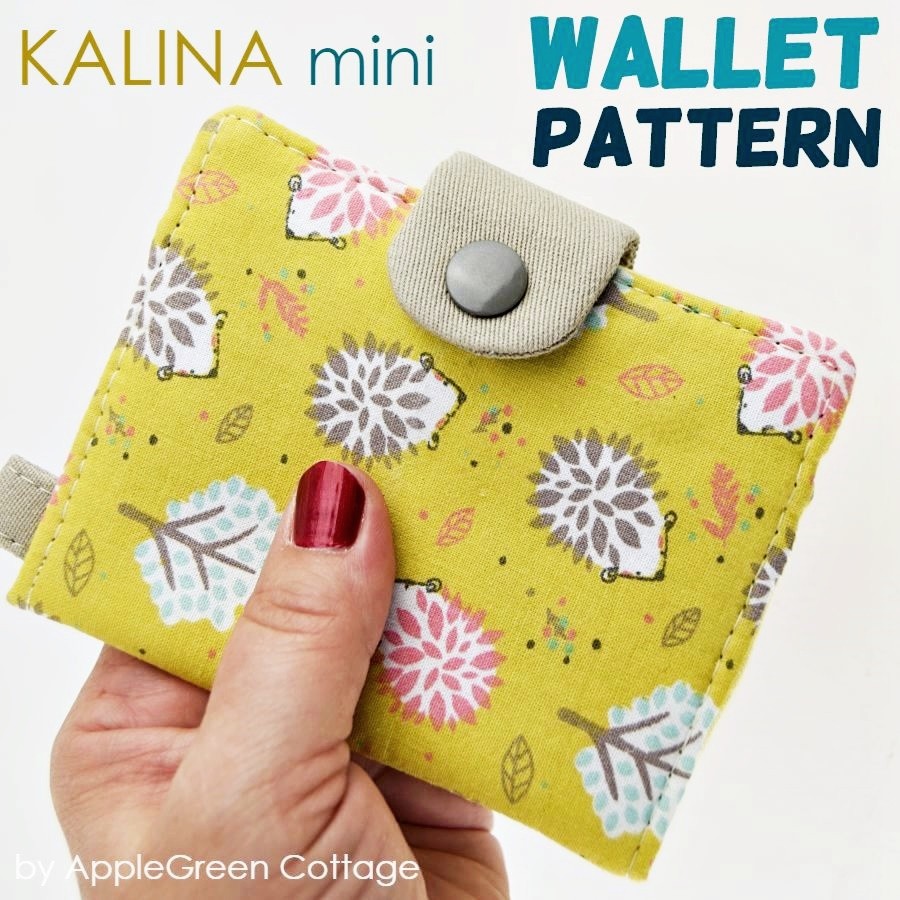
Or …check out this popular PDF pattern - the Kalina Mini Wallet in our shop. So practical!
Widespread Panic says
I'm a little confused by your recommendations for washing on delicate. I was taught to prewash the item in the same way it will be washed. While I usually wash everything clothing in cold water, I can see making an exception for flannel, because of shrinkage. But why not wash my pj bottoms like I plan to wash them when I'm wearing them -- on a regular cycle? Or are you saying that we should always wash our flannel garments on gentle cycle? Thanks!
Damjana Jakos says
Great question! 🙂 You’re right - prewashing the way you’ll wash the finished item is best. Flannel, though, tends to shrink, pill, and lose its softness with rough washing or hot drying, so a gentle cycle in cold water helps it last longer and stay cozy. If you prefer washing your pj bottoms on a regular cycle, that’s fine too — just expect more wear over time.
Annie says
Hi, thanks for this helpful collection of tips! I’ve been quilting for several years but am getting ready to try my first flannel quilt so I have a question and would really welcome your advice. I will be using some precuts and won’t be washing those beforehand, so should I also not wash the yardage I’m using as the background (both yardage and precuts are flannel)? What about the flannel backing fabric — should I prewash or not?
Damjana Jakos says
So exciting – a flannel quilt! Annie, I’d recommend keeping it consistent: if you’re not prewashing the precuts, don’t prewash the background yardage either. For the backing, same thing – skip prewashing so all your fabrics shrink together after quilting. Flannel does fray, so handle gently while piecing.
Glenda Mixer says
I zigzagged the pinked precut edges and then washed on delicate. Should I use a flat-felled seam or a French seam? I am making PJs.
Damjana Jakos says
Glenda hi, a great question! I'd be happier with a flat-felled seam on my pajamas, as a user. 🙂
Laura says
When making a flannel rag quilt I always machine wash it afterwards, adding a bit of table salt to the wash water to prevent colors from running. Also, during drying cycle, empty thread catcher often.
Pat G. says
If you are making baby things or sleepwear, prewash it for sure. It is very flammable, and prewashing removes a little of the loose fibers that burn easier. Still not the best choice for sleepwear, especially for fireplace or wood stove homes. I wish the manufacturers would make more flame-resistant flannel.
Damjana Jakos says
Hi Pat, you’re right—some flannel fabrics are made to be fire-resistant, either with special fibers or treatments. But I’m not sure how suitable or safe those treatments are for kids’ sleepwear or home items.
Becky says
I use a walking foot when sewing flannel. It prevents stretching and resultant tucks in the seams. This is especially important when sewing less expensive and looser woven flannels.
Another thing to do when sewing with flannel is to frequently clean your machine especially around the bobbin case. The flannel creates a lot of "dust bunnies" in your machine.
Apri says
I like to use flat felt or French seams when working with flannel. Except for quilts, of course. Those I zig-zag stitch. On garments, the fancy seams work best. Then, there is never any fraying. To hem, rolled hems work great. I take the extra time to zig-zag the fabric first.
Damjana Jakos says
Apri hi, a great suggestion, thanks!
Terri L says
Becky,
I am in a sewing ministry group that makes lap quilts, adult bibs, & walker pockets for several nursing homes. For the lap quilts, we use a lot of flannels since we had several pieces donated to us.
To keep expenses down, I have started using flannel as a batting. We have gotten some, mostly heavier grade flannels. Our lap quilts are approx 3ft x4 ft or 36x42 WOF which works great for approx 1 yard of fabric. Using the flannel as batting, it is a perfect weight for these quilts. Its also a way to use prints not so suitable for the elderly or overruns, etc. You can use the flannel either as batting for all 3 layers of the sandwich OR use quilting cottons for the outside layers. I do usually wash before sewing to avoid any changing shape OR color bleeds. Reds & other deep hues are notorious! Ironing also helps to set the dyes. Hope this helps.
Happy Sewing!
Barbara says
Lots of good tips. Thank you for sharing.
Linda says
I used the pinking sheers instead of sewing the flannel zig zag prior to washing and didn't have any problems. Thanks so much for all of the helpful information.
Sara says
Use white vinegar in your first wash of flannel so it won't pill in the future.
Patricia E Harvey says
How important is it to make sure my flannel fabric is 100% straight before making a baby blanket? I had been peeling back threads until I could get one thread to pull all the way from one end to the other on all sides. It's very time consuming! Any tips on how to straighten the fabric before sewing would be appreciated.
Laura says
Thank you for your article and tips, I'm ready to find a flannel project!
Kathy Shively says
Is there a particular thread that works best with flannel? Kathryn
Damjana says
Kathryn hi,
a great question. I use all-purpose polyester thread for sewing with flannel.
Damjana
Judy says
One thing I learned is if I cut each corner diagonally off of a piece of flannel to be prewashed it doesn’t fray nearly as much.
Damjana says
judy hi,
that's so good to know! Thanks for sharing this clever tip.
xoxo, Damjana
Bev says
Hi, Thanks for the tip Judy. How much did you cut off the corners?