

Bag fabrics - how to choose, what to use, and pros and cons!
Here's my top list of materials for bagmaking. It's not just about fabrics-let's call them bagmaking materials. I've also included a comparison of these materials, detailing which ones work best for bag exteriors (and when to use which!) and which are popular for bag liners.
And I've filled it with fabric-related tips to help you create your own beautiful bag! (Plus, skip my past mistakes 🙂
Table Of Contents
- New to bagmaking?
- Sew this EASY Bag!
- Best Fabrics for Bagmaking
- Prefer a deep-dive? Bagmaker's Interfacing Guide
- What Interfacing to use on Bags?
- Bagmaking Fabrics Summary Table
- Best Fabric For Bag Lining
- Where to buy bagmaking fabrics
- Where to get waterproof canvas (wpc) and wrc
- Helpful Tips
- WANT MORE FREE TUTORIALS AND PATTERNS?
How To Choose the Right Fabric For A Bag
Before we start searching for the best fabric to sew bags, here's a general rule: when selecting a fabric, consider the type of bag you're making, how much wear it will endure, and what your sewing machine can handle. For heavier fabrics you'll need a stronger machine. On the other hand, lighter fabrics like quilting cotton are easier to handle but will need sturdier interfacing.
Our purpose today is to give you options for all the future bags you plan to make, with or without a pattern.

Best Fabrics for Bagmaking
What follows is a walkthrough with the main features of the materials - and why they are great for bagmaking: quilting cotton, canvas, home decor, faux suede, faux leather and vinyls, cork, as well as a few extras.
Also, tips for selecting the right materials for your machine.
1 - Quilting Cotton
Starting your journey into bagmaking? No need to splurge on all the heavy-duty materials just yet. Start with what you already have, like quilting cotton, and make your first bag with ease!
Prefer a deep-dive? Bagmaker's Interfacing Guide
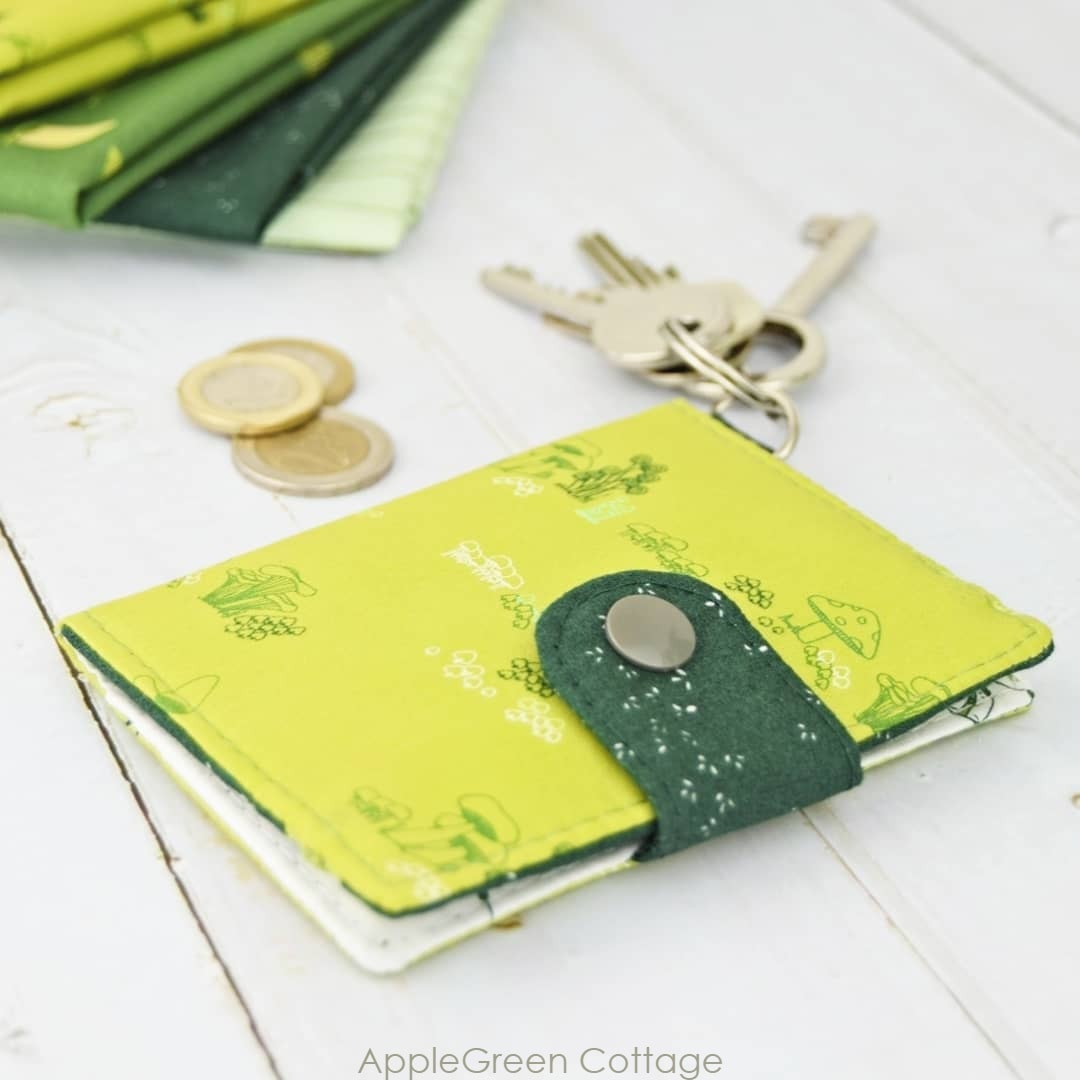
Quilting cotton is an excellent option, widely available in numerous prints and colors. It is easy to sew and has nearly no limits in bagmaking if properly interfaced. Always the perfect choice for small items, like this Kalina mini wallet:
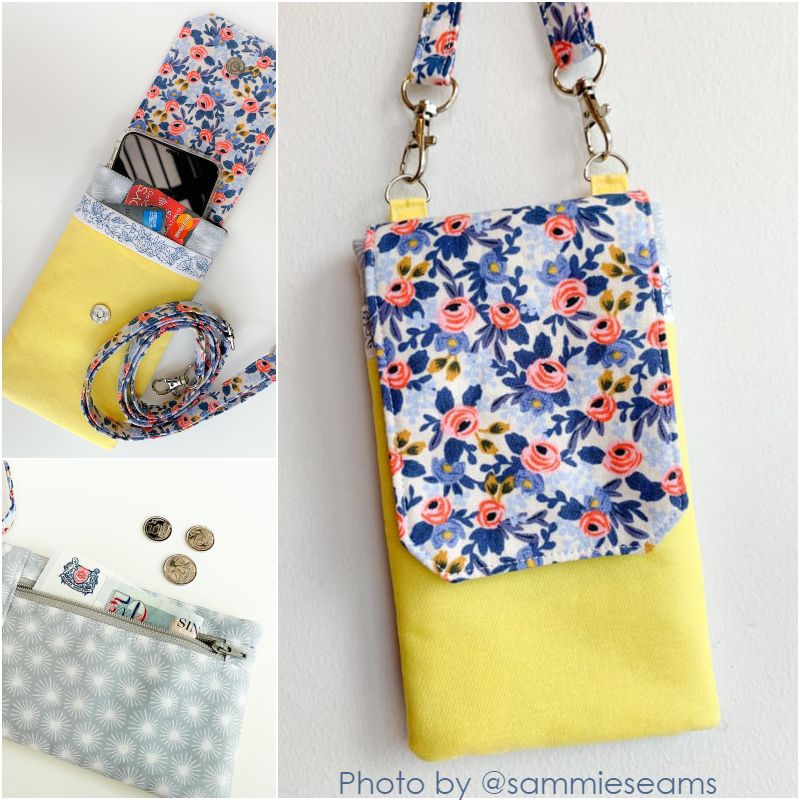
Want to add some accent fabric to a bag? Quilting cotton is a great choice for that. Also, good to use with scrap-friendly patterns, like the AIDEN cell phone pouch:
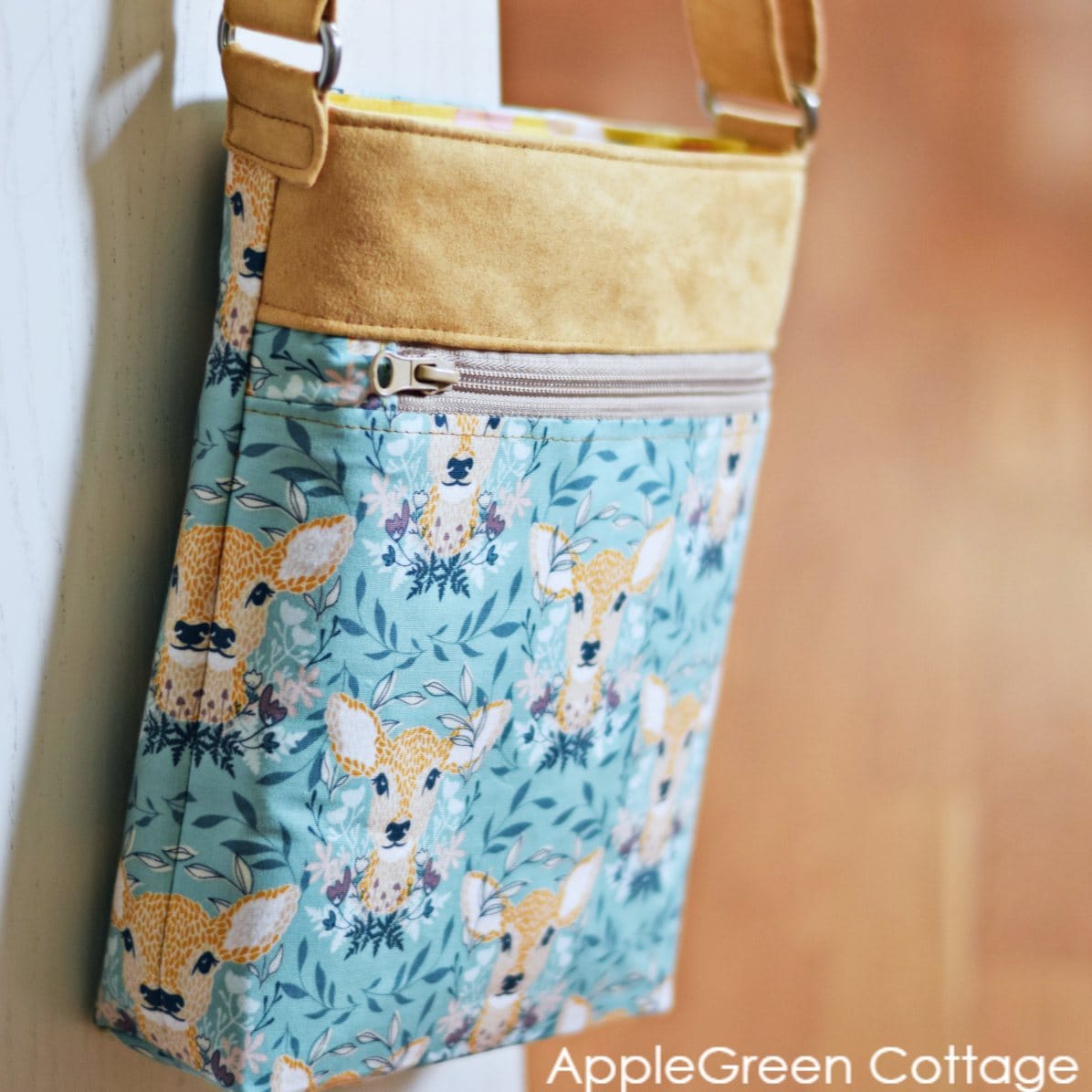
TOP TIP: it's easier to work with a fabric print that is not directional. But if you want to use it, my patterns include markings showing fabric print direction where needed.
BONUS TIP: When using quilting cotton for the exterior on bags, fuse a base layer of light-to-mid-weight interfacing first (Pellon SF101). This prevents creasing when you add stiff interfacing and adds stability when using fusible fleece.
2 - Canvas
Are you looking for durable, sturdy fabric? Canvas is a fantastic choice for bagmaking. Not just because you will need thinner interfacing, but also because it's a great choice for everyday bags and totes. Also, it's generally inexpensive and comes in a range of weights.
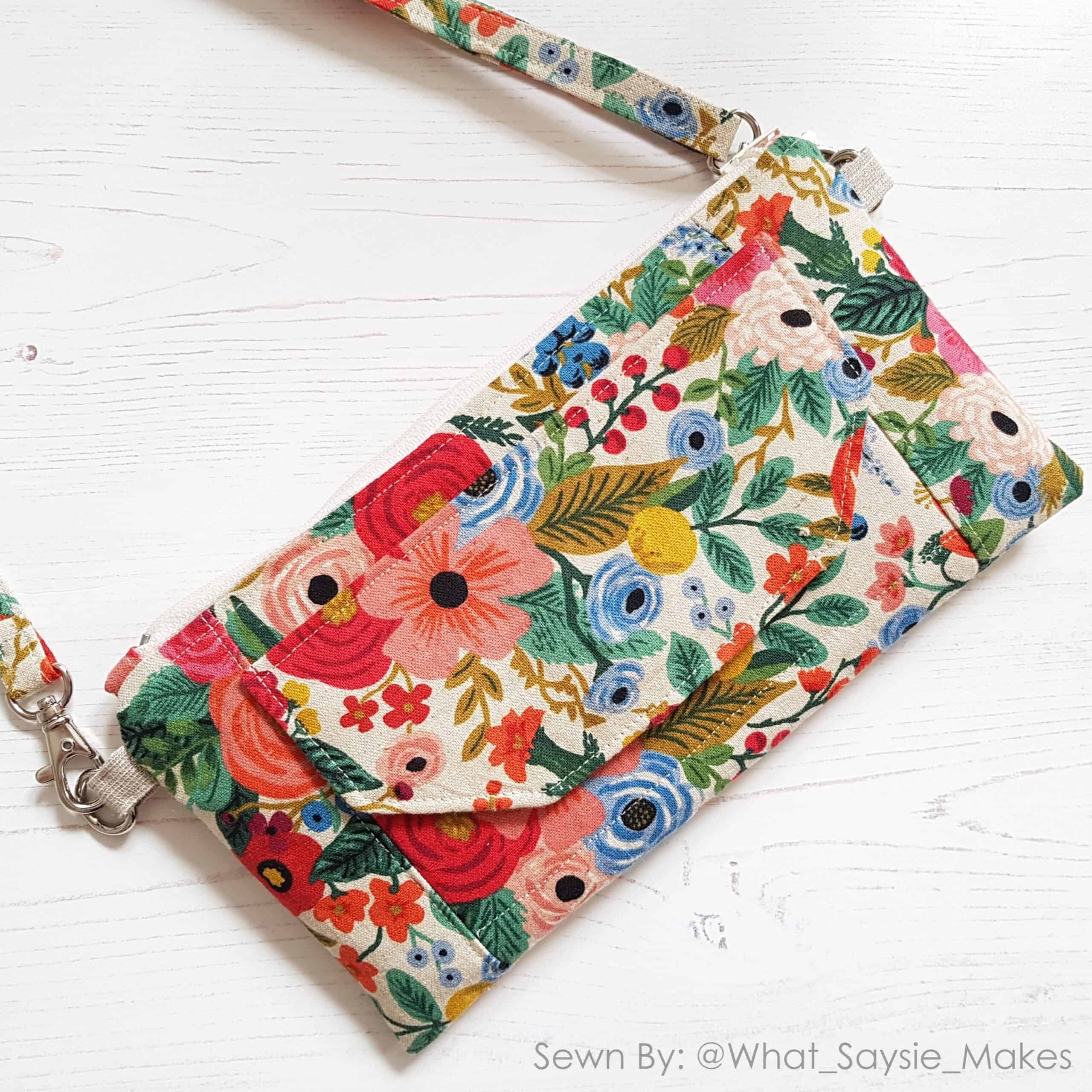
Compared to other fabrics, canvas is heavier than quilting cotton but still manageable for a home sewing machine. Here's the ENYA wallet bag that our tester, Sarah @what_saysie_makes, sewed with the gorgeous Wildwood canvas by Rifle Paper Co:
NOTE: just to mention, this fabric group also includes waxed canvas, and oilskin canvas. Special effects, as it gives your bag a beautiful vintage look. (I'll leave these two for a special post, or else you'll spend a week reading through.)
TOP TIP: stick to medium-weight canvas if you are sewing on a home sewing machine - don't use the super dense, heavy canvas.
3 - Faux Suede
Oh I love this one! I love faux suede because it's such a delight to sew. Faux suede gives you that soft, luxurious feel to your bag. It is medium-weight and easy to sew, making it a favorable choice for bagmakers. In short, all my 3 machines (my basic machine too!) sew through it like through butter.
Faux suede is soft and it can have thin or thicker backing, the one I get in a local shop has a thick woven under-layer, stiffer than SF101. Some can be thin, which would require additional interfacing.
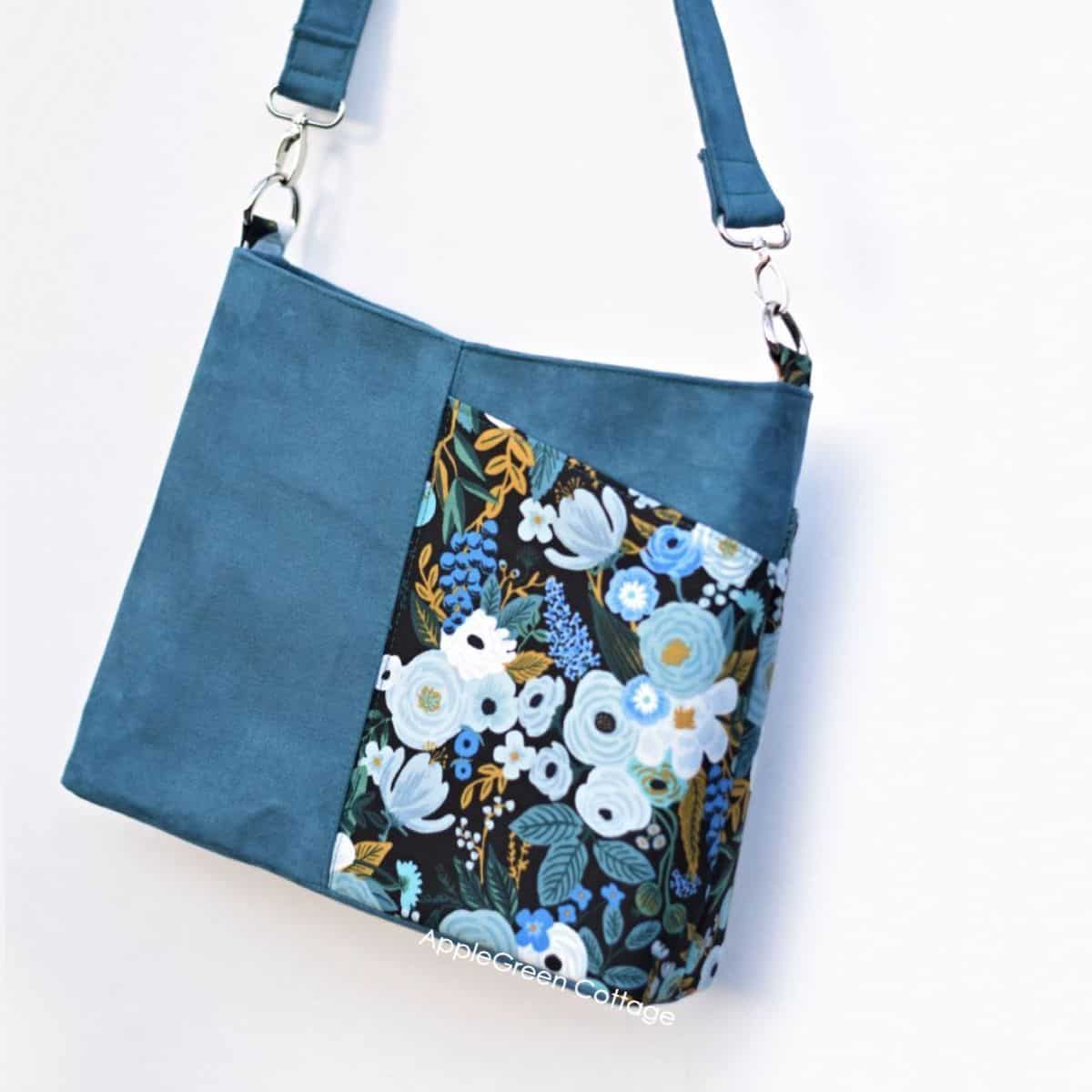
Also, it's way more forgiving than vinyl if you need to unpick a seam - you can hide the holes, tried and tested! Here's my SIRINA shoulder handbag in blue faux suede and stunning Rifle Paper Co floral accent print:
4 - Faux Leather and Vinyl
Looking to achieve a sleek, professional appearance? Go with faux leather! It mimics the feel and look of genuine leather - but without the cost of real leather.
Faux leather comes in an array of weights. Don't use the thickest, stiffest one on a beginner home sewing machine. It is made from polyurethane (PU) or polyvinyl chloride (PVC) - the latter can have a cheap, plastic look, while the PU leather is a higher quality option.
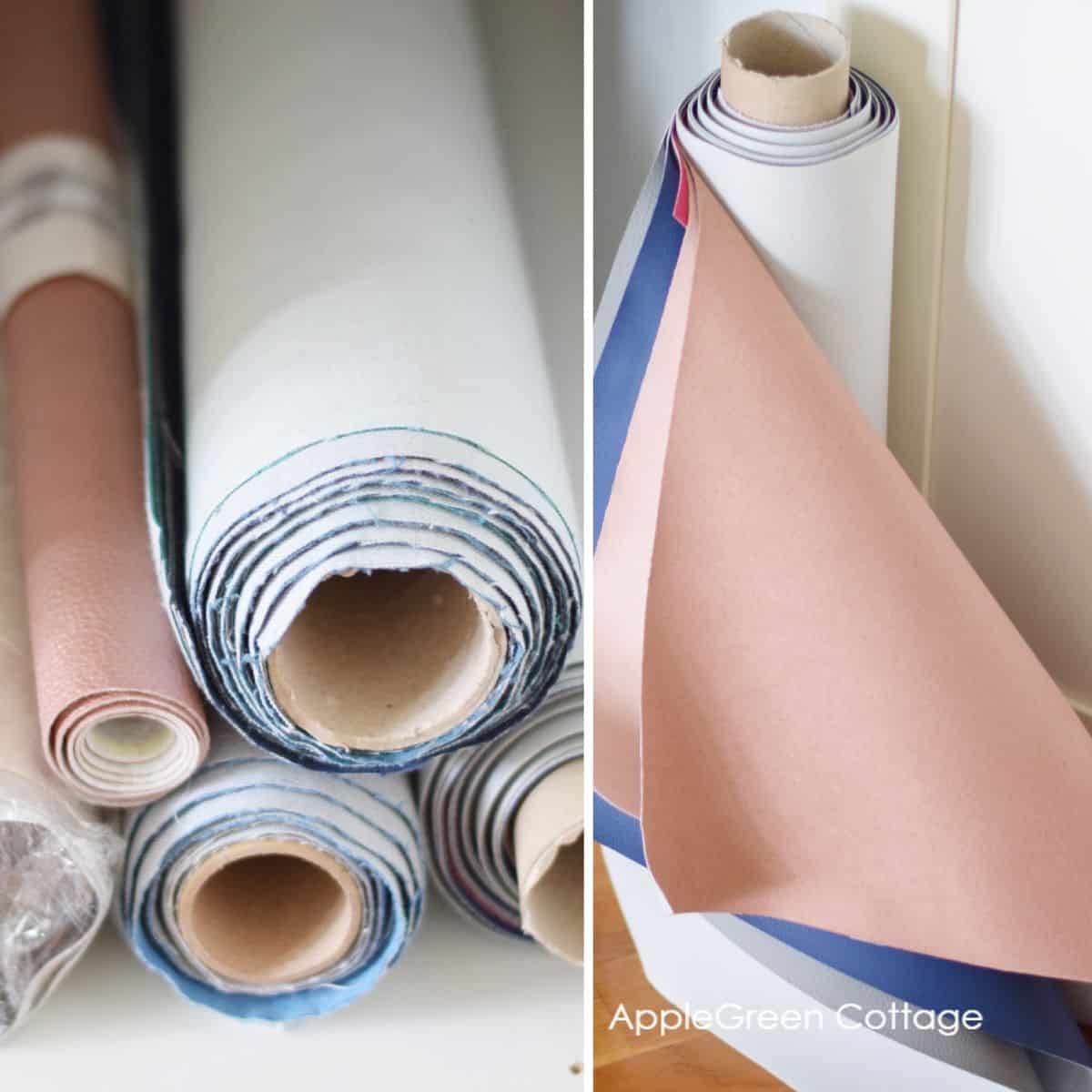
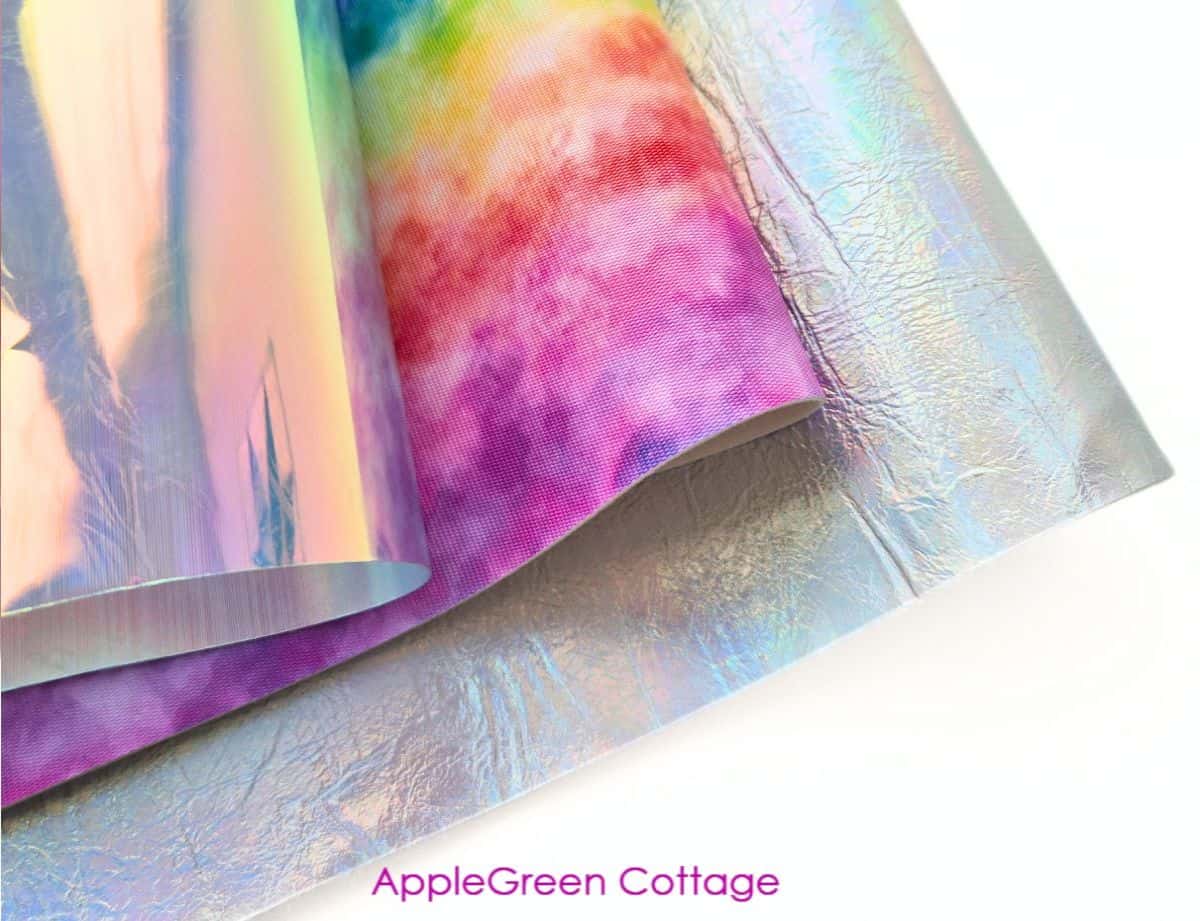
And here's a more playful option: vinyl. Vinyls are made of PVC, wildly versatile. This material is easy to clean and very durable. I store it on rolls:
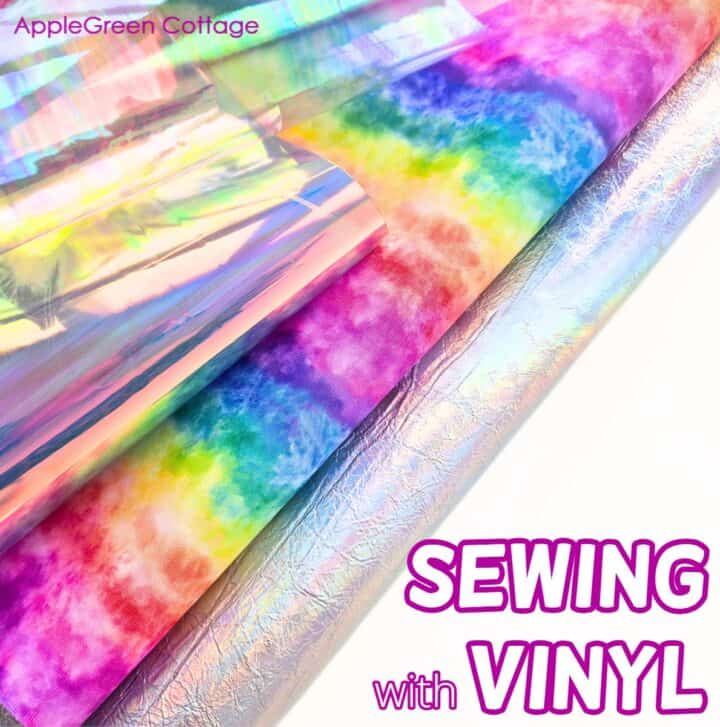
Difference between faux leather and vinyl? These often ovelap, but as a rule of thumb, vinyl always has a polyvinyl chloride (PVC) coating layer, hence the name 'vinyl'. It comes in a wide range of finishes and textures, from smooth and glossy to matte and pebbled. (See these tips for sewing with vinyl) It's highly versatile in terms of color and pattern options, but it typically doesn't look as natural as faux leather.
My Top 7 TIPS!
Also, its' even stickier to sew with. (use a Teflon foot!)
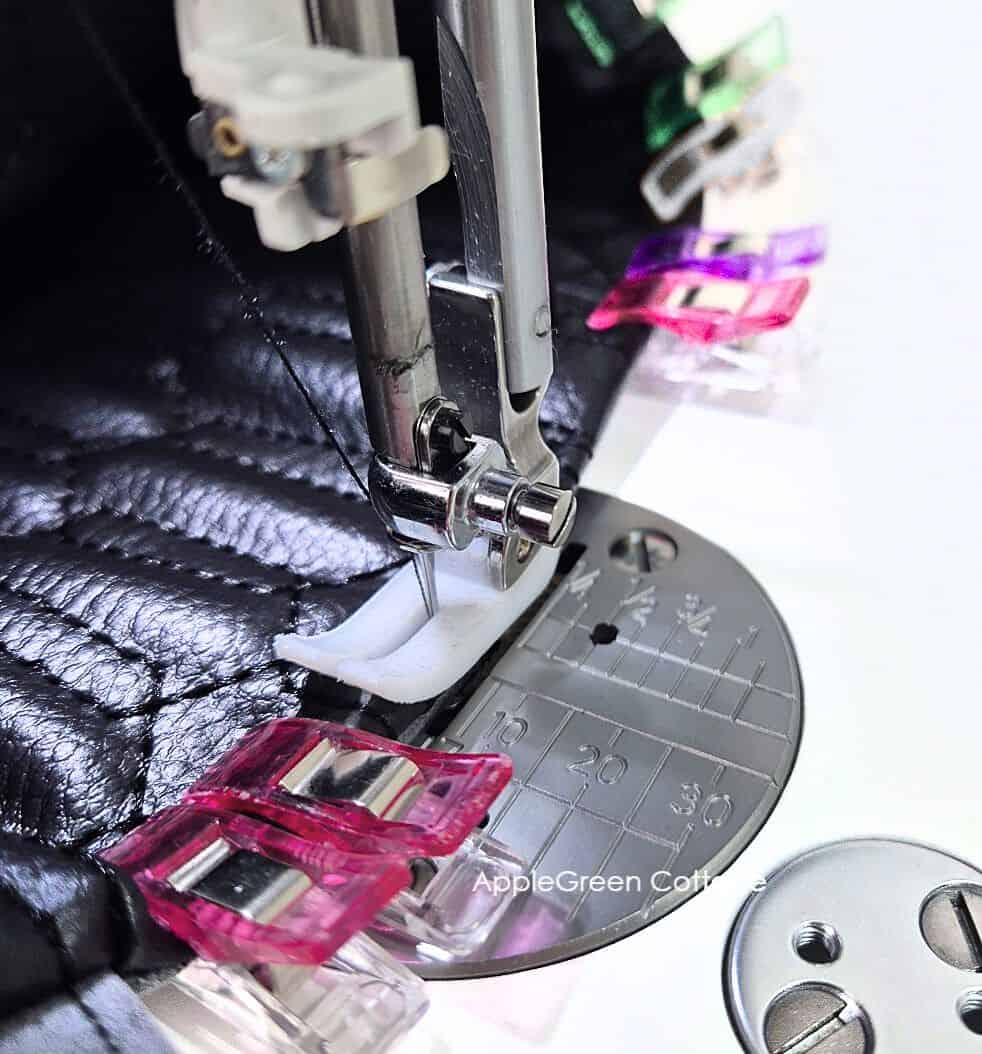
And, the thicker the faux leather or vinyl, the stronger the machine. Here's my latest pattern I'm working on, and just for fun, I made the smallest version with a foam-backed, quilted faux leather - on my Janome HD9.
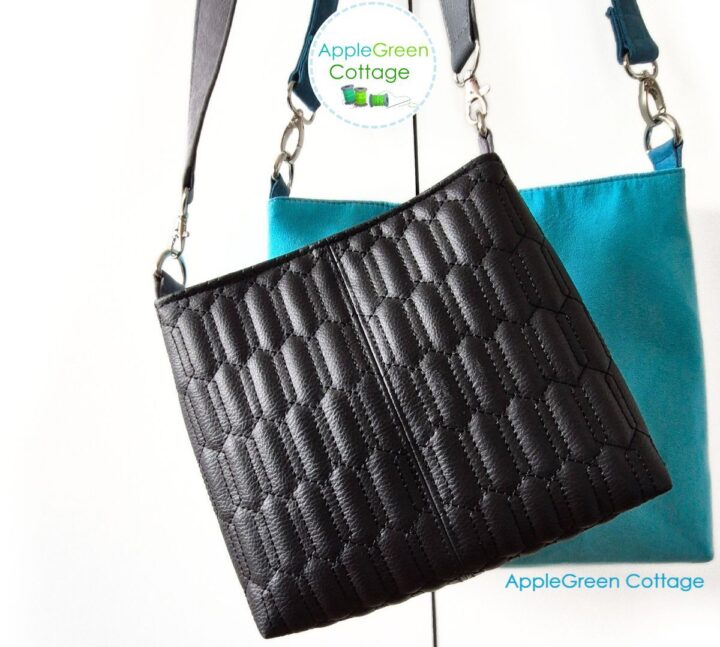
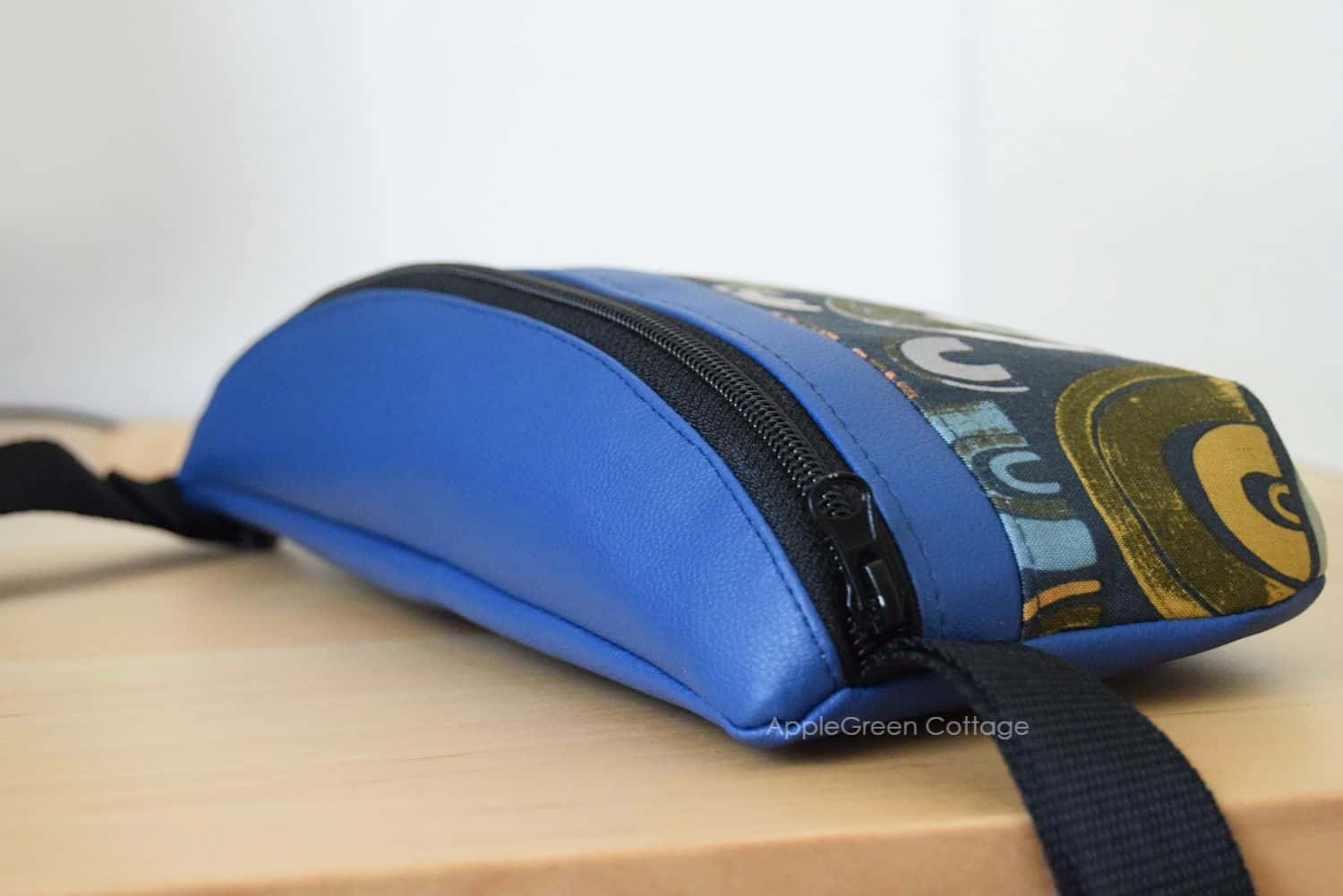
Faux leather and vinyl are both a great choice for a bag that will get a lot of wear and tear, like the ZARYA hip bag. Can you tell I love the faux-leather plus cotton combo?
NOTE: Always bear in mind that faux leather is pretty unforgiving when you need to unpick - you won't be able to hide all the holes from stitching if you need to redo a seam. And, the bag integrity might suffer due to perforation if you stitch over the same spot twice.
A solution to ↑↑↑? Just use accents in faux leather as a first bag with faux leather, matching it with quilting cotton. (Properly interfaced, of course.)
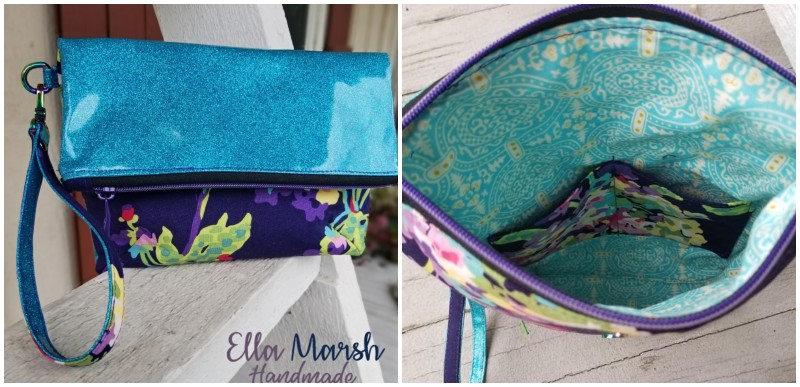
Here's some glossy vinyl that our pattern tester, Lorna @ella.marsh.handmade, used to make the SOPHIA clutch:
NOTE: never use pins on vinyl and faux leather, they will leave marks. Use sewing clips instead.
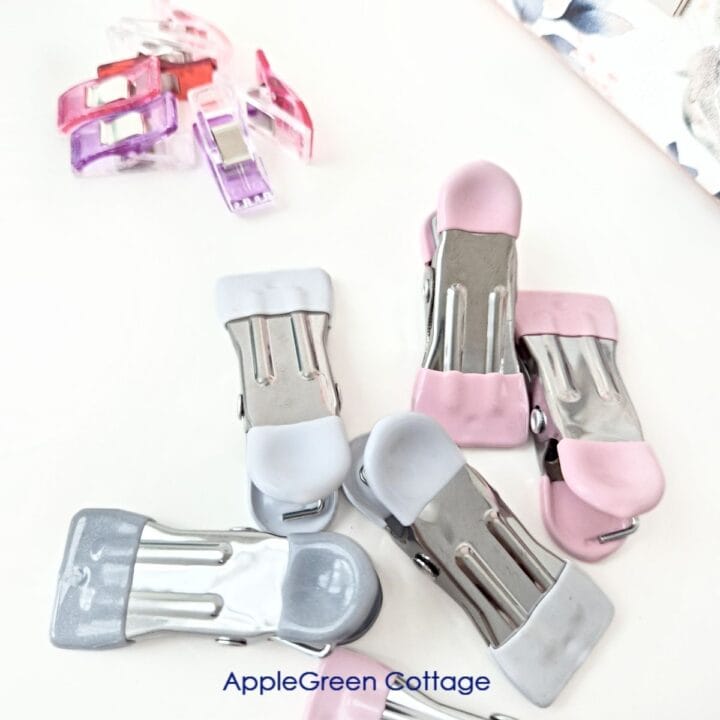
Sturdy Bagmaking Clips I love
5 - Home Decor Fabric
Want to give your bag some extra structure? Home Decor Fabric is designed for durability and strength and comes in various weights and patterns. This makes it a great option for both structure and style in bagmaking. Home decor fabric can be as strong as canvas but has more decorative options.
Here's a stunning, classic-look foldover clutch made from a mix of upholstery and decor-weight fabric by our pattern tester, Kadri @kadri_kivistik:
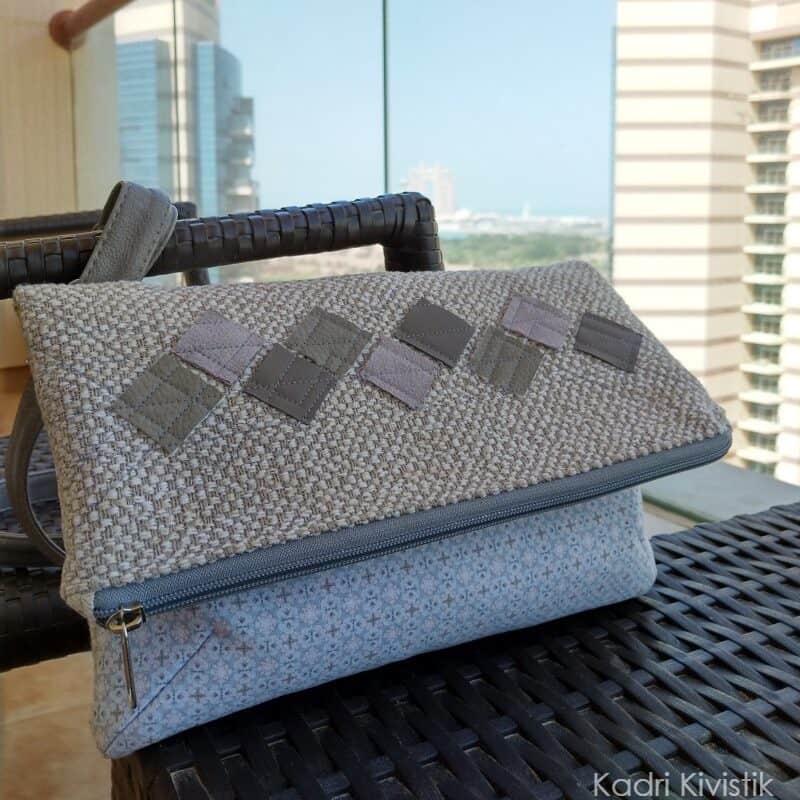
TOP TIP: Home decor fabric will often fray a lot, so it's good to add a layer of fusible interfacing before you cut it, to reduce fraying. Also, use Fray Check if you use grommets.
6 - Cork
Beautiful, natural sustainable material widely used in bagmaking, especially with industrial machines. It is pliable, easy to sew with, and makes beautiful bags. You'll love the range of colors, and prints it comes in. There's a downside though, for all of us who use a domestic machine: bulk. Sewing through multiple layers can be tricky as layers get bulky. In this case, look for thin cork.
You'll mostly see at least one of the tester bags made with cork - and when you do, it's most probably sewn by Noelle @olddogsewing. She does magic with cork! Here's her stunning ZARYA hip bag sewn with cork and a large print vinyl:
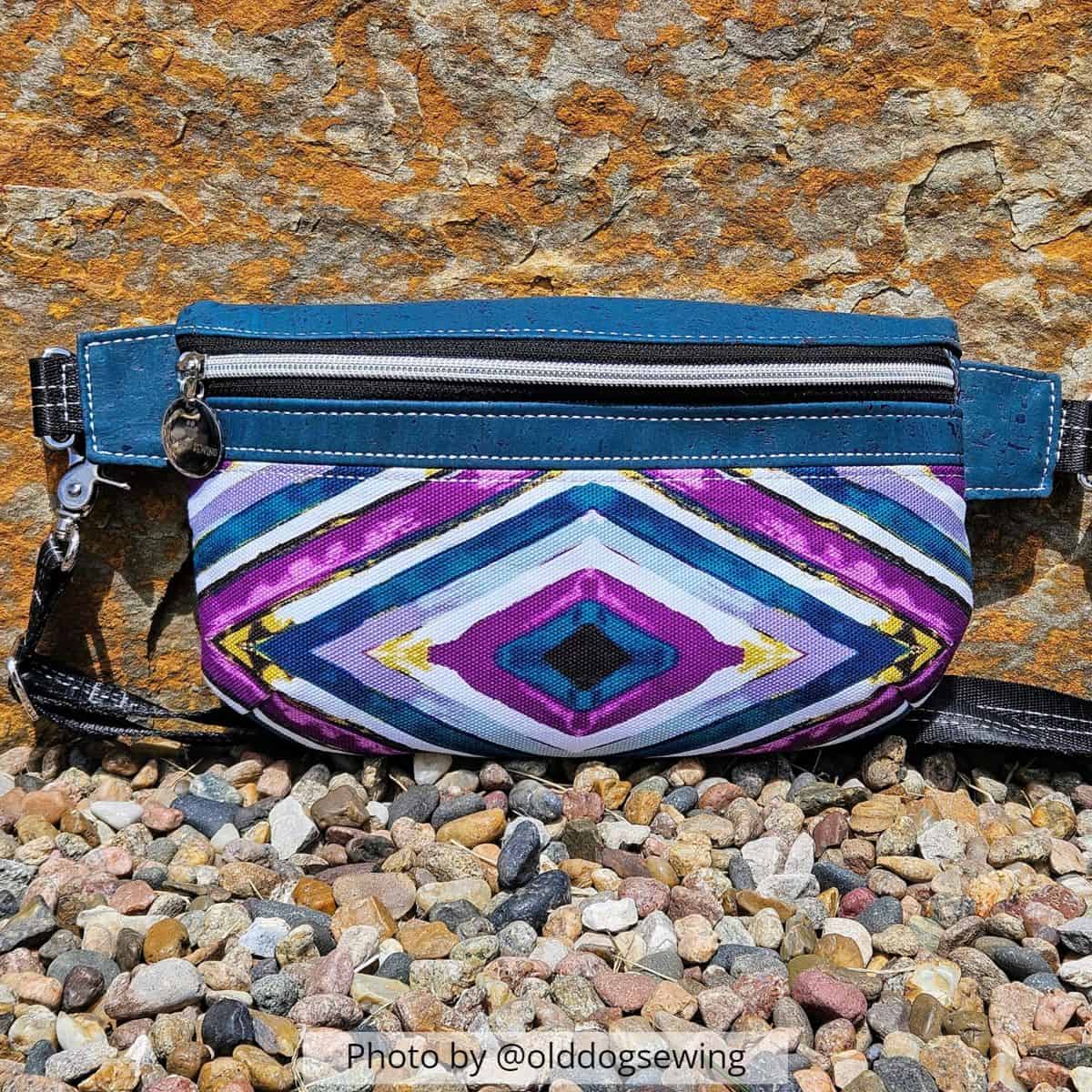
Since it does not wrinkle and you cannot press an edge into it, it will make no sense to iron it. But what you can do is use DST (double-sided tape) to temporarily tape the seam open, and then topstitch that seam open. This gives a bag such a professional finish!
And here's some printed cork on the ALLINA tote, sewn by Zeïba @sew_special_by_zm sewn on a domestic Janome Atelier 7, using no special equipment but the walking foot - for topstitching only:
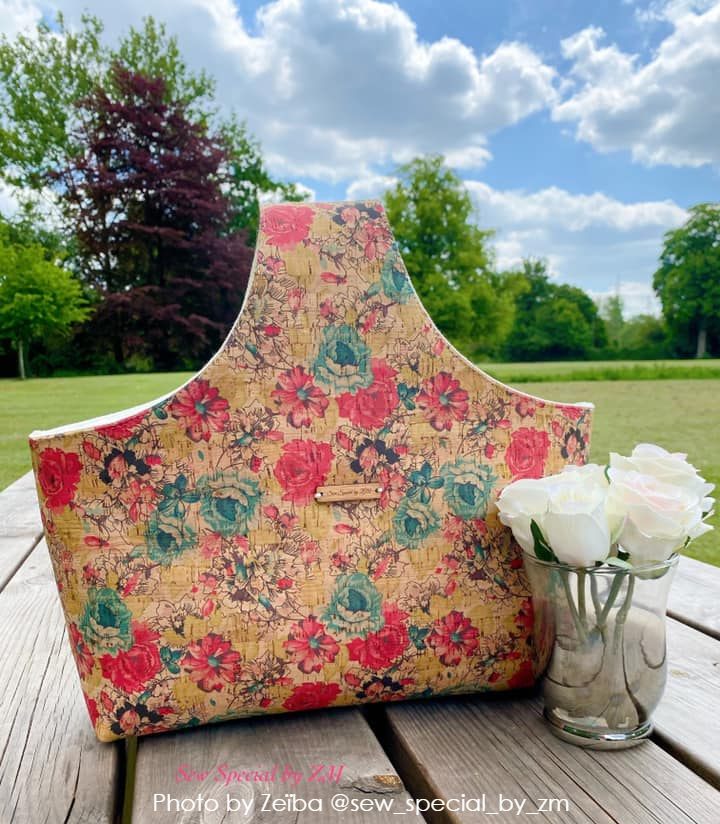
TOP TIP: never store cork folded, that could cause damage. Here's how to store cork, vinyls, faux leather and all other, stiffer bagmaking materials.
7 - A Few Extras
Oilcloth is a woven fabric with plastic (PVC) coating on one side to give it a waterproof finish. Perfect for lunch bags, but it can get pretty bulky on the seams when sewing multiple layers.
Denim - close to canvas in terms of durability and style, the main difference being its twill weave (how threads are interwoven together). It comes in different weights.
A special treat? Robert Kaufman Essex Linen. It would fall into the Decor-weight category, a beautiful yarn-dyed mixture of cotton and linen. Once you try it, you'll be hooked. Here's a beautiful bag sewn by Cara at @earlybirdstitches:
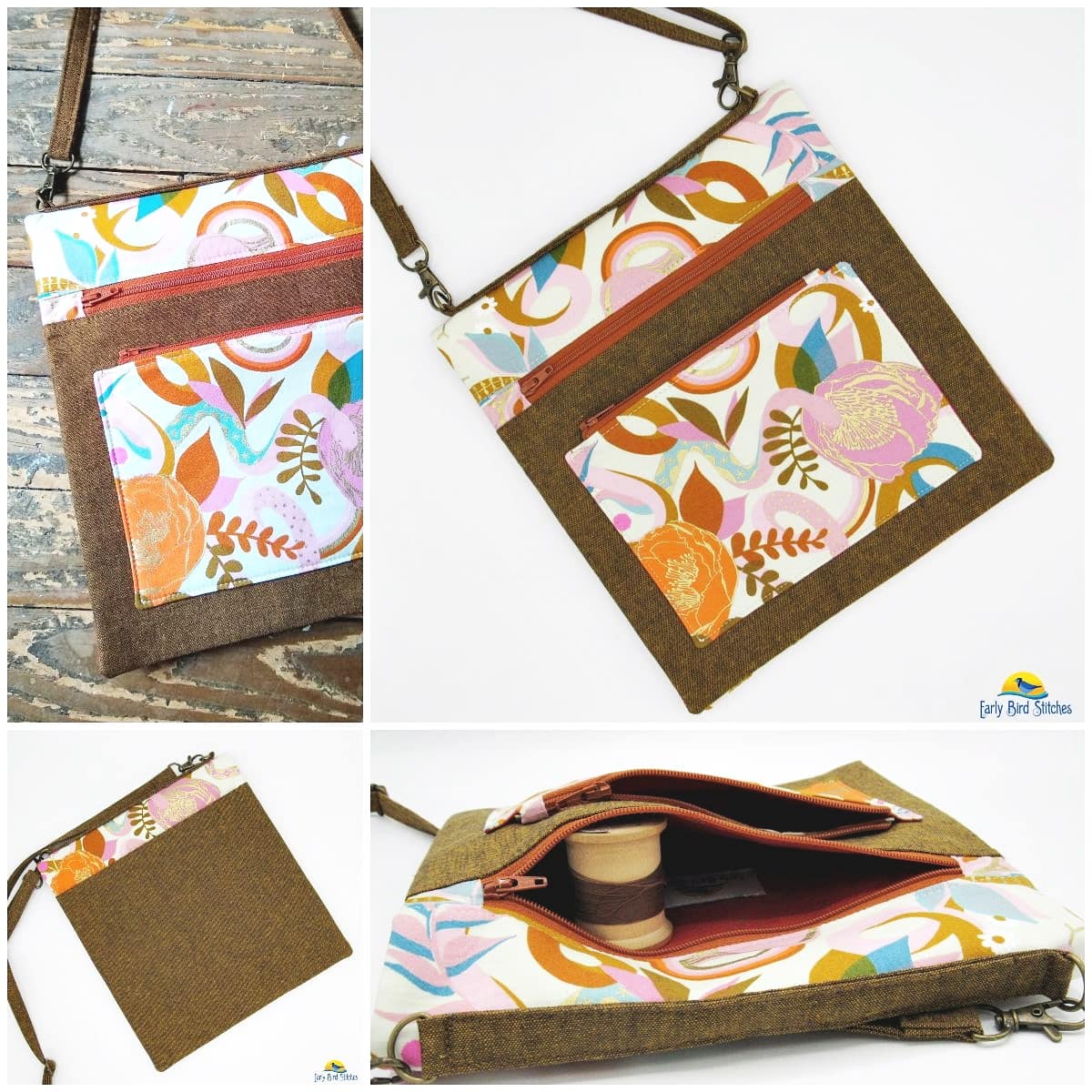
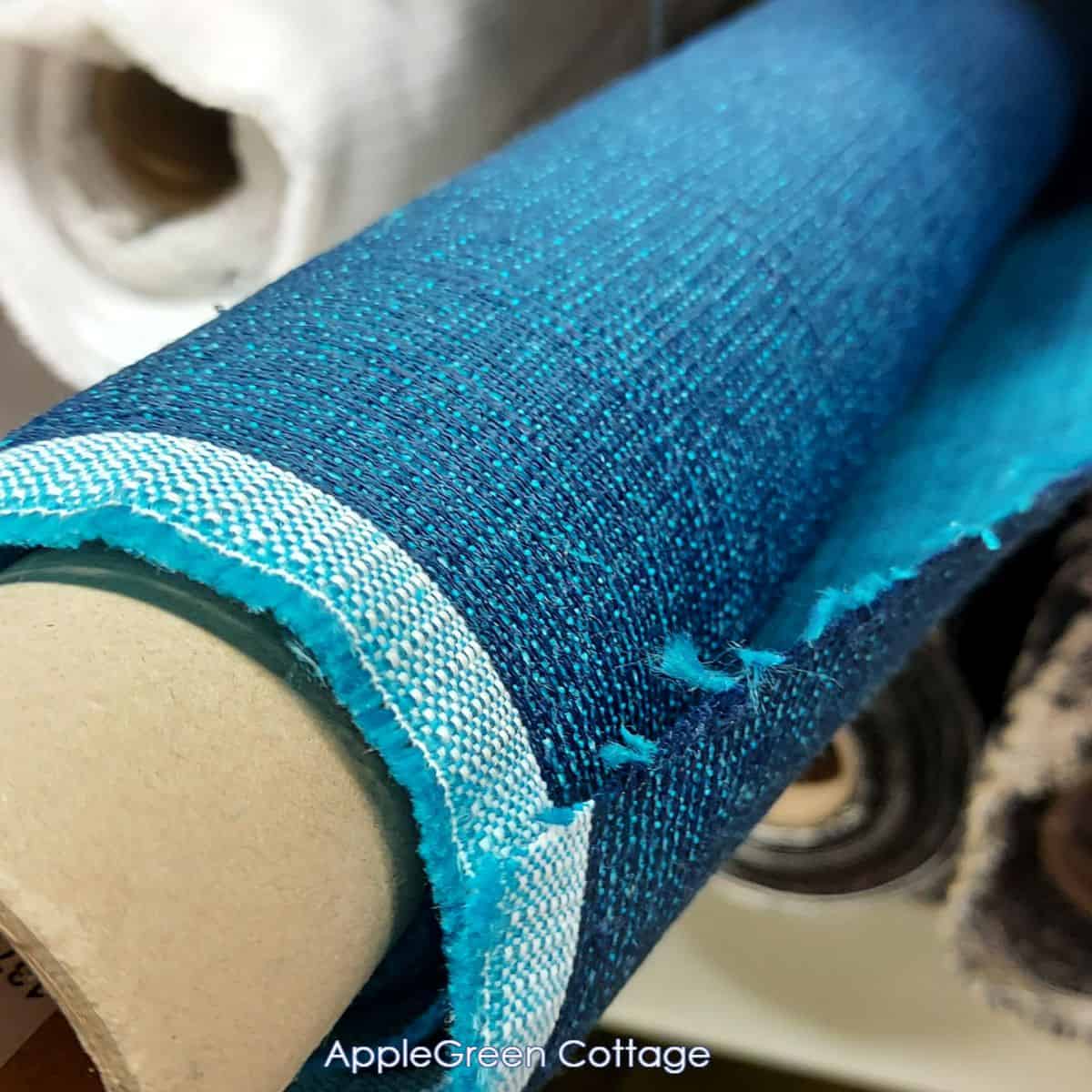
And, I will mention it in linings below, but let me just add that waterproof canvas can come in heavier weights too, and the heavy-weight WPC can be used as exterior on bags. Due to its stability you don't need to interface it, it does not fray, and is not too expensive. A lovely material for a makeup bag, or a dopp kit!
What Interfacing to use on Bags?
First read my post on where to use Decovil stabilizer (and how to use it!), then get my Quick-Start Bag Interfacing CHEAT-SHEET- a simple 2-page PDF to help you choose the right interfacing for your first few bags:
Bagmaking Fabrics Summary Table
Here's a summary table for you, highlighting the main features of each bagmaking material.
| Material | Why It's a Good Choice |
|---|---|
| Quilting Cotton | Widely available in various prints and colors. Easy to sew. Ideal for small items and as accent fabric. |
| Canvas | Durable, sturdy, and easy to sew. Perfect for everyday bags and totes. |
| Faux Suede | Soft and luxurious, adds a high-end look to bags—medium weight and easy to sew. Forgiving if you need to unpick seams |
| Faux Leather & Vinyl | Provides a sleek, professional look without the cost of real leather. Easy to clean and very durable. |
| Home Decor Fabric | Durable and strong. Comes in various weights and patterns. Good for structure and style. |
| Cork | Natural, sustainable, and pliable. Available in various colors and prints. Easy to sew (but will get bulky when sewing multiple layers.) Does not wrinkle. |
| Extras | Oilcloth: waterproof, perfect for lunch bags, can be bulky Denim: durable like canvas, with a twill weave Robert Kaufman Essex Linen: Decor-weight, beautiful cotton-linen blend Waterproof Canvas: Stable, no need for interfacing, good for makeup bags or dopp kits. |
Comparisons
Of course, all these materials have their differences. Let me list just a few that stand out and might help you decide which one to use on a bag when in doubt:
- Canvas vs. Quilting Cotton: Canvas is more durable and suitable for the main body of a bag, while quilting cotton is lighter and must be interfaced, unless used for linings or pockets. Canvas is heavier than cotton but still manageable for a home sewing machine. It's more durable than quilting cotton.
- Faux Suede vs. Canvas: Faux suede offers a soft, luxurious finish compared to the rugged and sturdy nature of canvas.
- Faux Leather vs. Home Decor Fabric: Faux leather provides a sleek, professional finish but can be harder to sew. Home decor fabric offers a good balance of durability and ease of sewing with more decorative options.
- Faux Leather vs. Quilting Cotton: Faux leather is tougher to sew than cotton but gives a more polished finish. It's more durable and resistant to wear and tear.
- Home Decor vs. Canvas: Home decor fabric can be as strong as canvas but with more decorative options. Generally, home decor fabric is easier to sew than canvas - the canvas has a denser weave.
TOP TIP: always check out the Fabric Recommendations chart on a pattern - all good bag patterns will include fabric recommendations that work best for that particular pattern. (Our patterns always do.)
Best Fabric For Bag Lining
Until here, we talked about bag exteriors. Now, a word about bag lining. It is a way simpler area to tackle, as most times, quilting cotton will be your best choice for bag and zipper pocket linings.
Here's the interior of our popular Enya wallet bag - so many pockets, but I'm so proud to say I managed to get rid of any bulk in the seams - domestic machine-friendly + beginner-friendly pattern, it's a win!
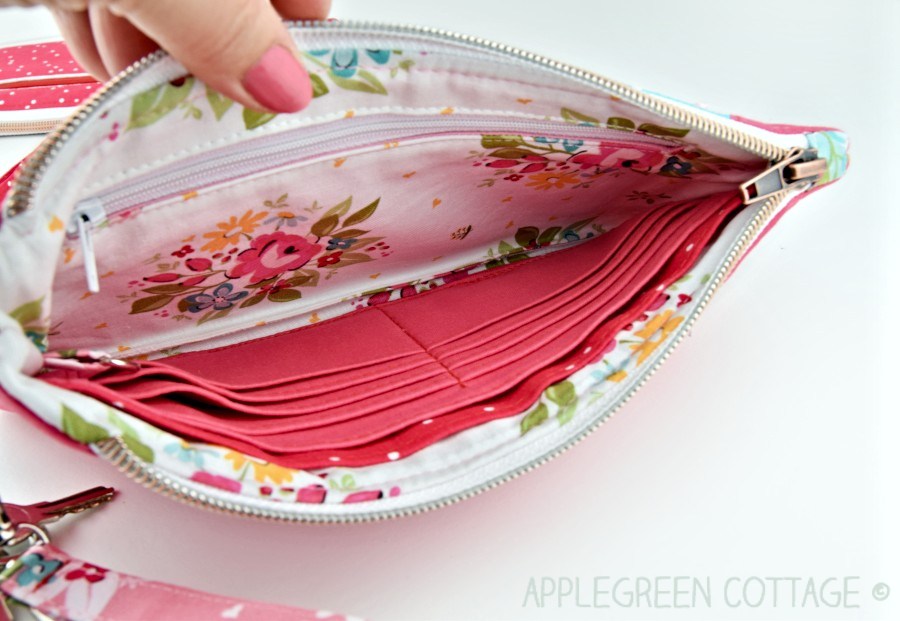
The same holds for sewing card slots: you need something thin enough to fold multiple times - and then sew all these folded layers together. So, to keep it short, I'm limiting it to 3. Okay, 4:
- quilting cotton
- ripstop nylon (usually you'll get the really lightweight one, great as lining on toiletry bags) - you'll recognize it on a thicker thread every quarter of an inch, both horizontally and vertically, creating a net.
- WPC - waterproof canvas (thicker than ↓)
- WRC - water-resistant canvas. The difference between these two: if you have a domestic sewing machine, use the latter one, WRC. It's thinner than WPC.
Pro Tip For Beginners: while I always interface quilting cotton that I use as bag lining (my favs are SF101 and Vilene G700), you don't interface WPC, WRC, or ripstop.
Where to buy bagmaking fabrics
Best bagmaking materials shops where you'll find great canvas material for tote bags, faux leather, vinyl (that can be sewn on a domestic)
- More Me Know (Lauren Mormino) (US) - the vinyl is so easy to sew with! It's not too stiff.
- Sew Hungry Hippy - beautiful, vivid vinyls and 'moonglow' faux leather (that can be sewn on a domestic)
- Zipper Valley - they carry gorgeous printed vinyl for bags!
- Itchin' To Get Stitchin' CustomFabric (custom fabric, amazing vinyl! )
- Missouriquiltco.com - they carry a range of vinyls, faux leather, and take a look at AGF canvas, too!
- Emmaline Bags - well-known for top-notch bag hardware but they sell fabric too!
- Miss Matatabi (stunning, vibrant Japanese prints!)
- Fabric Wholesale Direct (they also sell Ottertex waterproof canvas)
- Tania Fabric (and Tania Fabrics FB group) is another great site for buying fabrics but also bag hardware, interfacing, zips etc. The shop was sold a while ago and is now owned by Sarah Tuft, Sew and So Crafty
- Bo-Dee-Oh (great vinyls for industrial machines)
- one more for Australia: sunkissmelbourne.com (leather, cork, also, I see waxed canvas? Yay!)
- Fabric Direct (water-resistant canvas)
- Wonderground Fabrics (WRC, waxed canvas, water-resistant binding, and more!)
Just a start, but I'll be adding to this one a lot!
Where to get waterproof canvas (wpc) and wrc
Just a few top ones:
- Fabric Wholesale Direct - great pricing, mostly solids for WPC
- Wonderground Fabrics
- Sew Yours - wide selection, good for both interior and exterior
- My Fabric Dresser - Canada, WPC + waterproof cotton canvas (often via pre-orders)
- Your Vinyl Source - Ottertex WPC, WRC, and custom prints
- More Me Know
AND MORE Fabric for Bags
- Robert Kaufman Essex Linen
- Rifle Paper & Co canvas
- Art Gallery Fabrics - Where To Buy Art Gallery fabric
- Europe-based heavy canvas by Mind the Maker - make sure to use an industrial or at least heavy-duty machine for sewing with multiple layers of this one. It's gorgeous though!
Where to find good bag hardware supplies?
See where to buy bag hardware. I made that list because I have been getting emails from people asking me to let them know my favorites. Really, searching for good bag hardware can be a pain, so I thought I could make it easier for you.
Just want to cover the bases? You'll mostly be looking for d-rings, swivel clasps, and trigliders if you are making an adjustable strap.
Where to get zippers for bagmaking?
From metal to nylon, and coil to invisible, zippers come in various types suited for different bag styles and uses. I simplified my life by mostly using nylon coil zippers by the yard.
Here's my zipper guide with best zipper shops. Also, Amazon ↓↓↓
Shop my personal favorite sewing supplies on Amazon HERE.
Helpful Tips
Here are some answers to common questions about bagmaking materials to help you out.
If you're a beginner, you'll want to start using quilting cotton. It's an excellent choice because it's easy to sew and widely available in various prints and colors. An easy way to strengthen it is applying fusible fleece, for starters.
Yes, upholstery fabric can be a great choice for bagmaking due to its durability and wide range of designs. It is, however, heavier and thicker than home decor weight. This is why you'll need to make sure you pick the weight that your sewing machine can handle - a home HD sewing machine usually can.
If you're asking if you can mix different fabrics in one bag, the answer is absolutely a yes. Mixing fabrics like quilting cotton and faux leather can add texture and visual interest to your bag. However, you'll need to use appropriate interfacing for each, to bring their weights close together.
If you need to unpick a faux leather or vinyl piece, cut it off on the perforated line. Then either use it on a different project, so it's not all lost, or make a slightly smaller bag if your pattern allows an easy adjustment. What you get is just a tiny bit shorter bag.
Yes, but VERY cautiously: the front of water-resistant canvas will usually allow pressing on a low setting, but the back is PUL/vinyl and should not at all be touched by your iron. When you fold the WRC with right sides together and press over the front side, the PUL lining might stick a bit. IF you press just do it from the front, on a low setting, and quickly.
WANT MORE FREE TUTORIALS AND PATTERNS?
Get email updates and never miss out on new patterns, printables, and tutorials:
Mea Cadwell says
Pressing water resistant canvas: I suggest using a pressing cloth when doing this. I use a silk organza. And backing that gets "oozy" will end up on the pressing cloth instead of the iron.
Damjana Jakos says
Thank you Mea!