

Wondering how to sew vinyl or faux leather without frustration? Try these beginner-ready vinyl sewing tips for clean seams, strong stitches, and gorgeous handmade bags.
My first vinyl project was… crunchy. Yours doesn't have to be. A few smart tweaks, and sewing vinyl goes beautifully on any domestic machine.
Table Of Contents
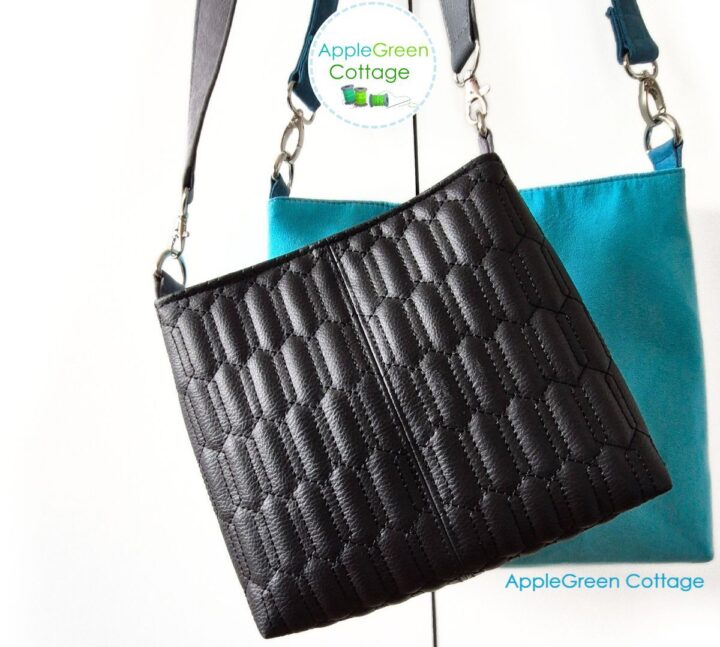
Vinyl Types for Bagmaking
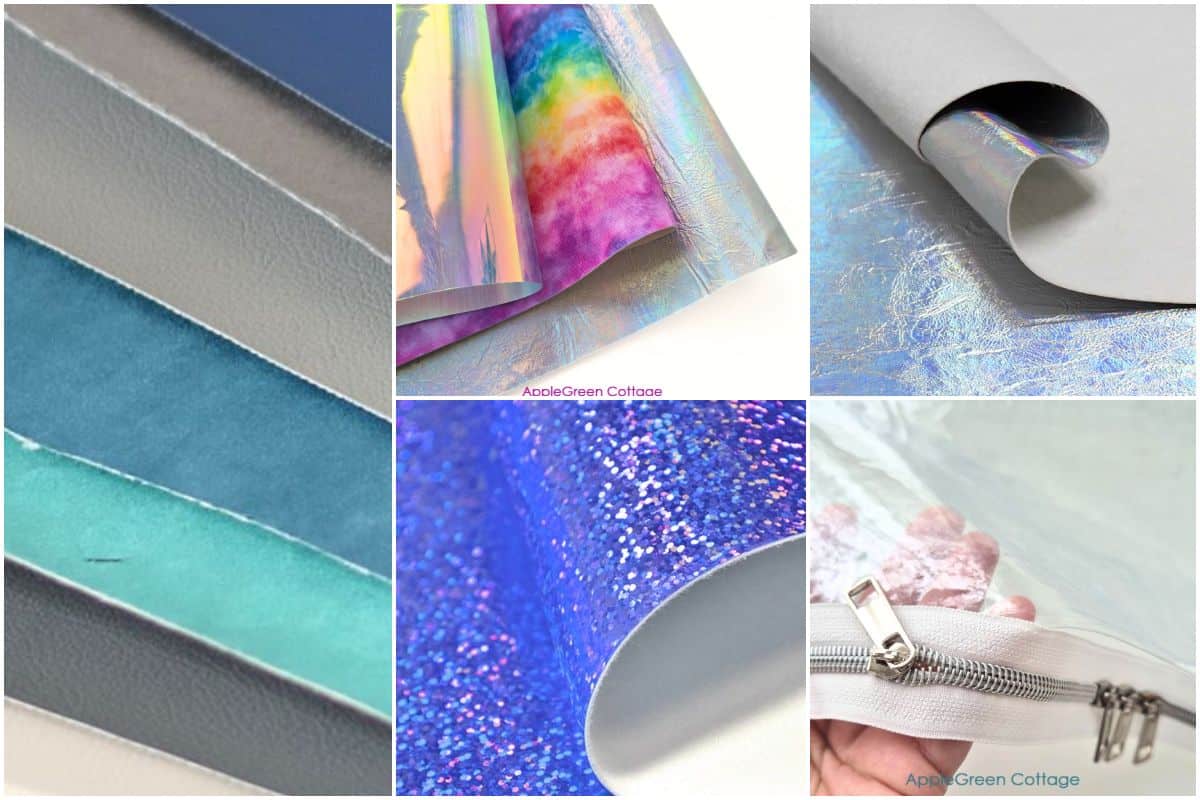
Quick note before the tips - there isn't just one vinyl. I have a whole post on materials used in bagmaking, but here just in short, about this whole family of vinyl and faux-leather options:
- Standard PVC Vinyl - smooth or textured; great for everyday bags.
- Marine Vinyl - heavy-duty, UV-resistant; better durability.
- Upholstery Vinyl - thicker with leather-look textures; adds structure.
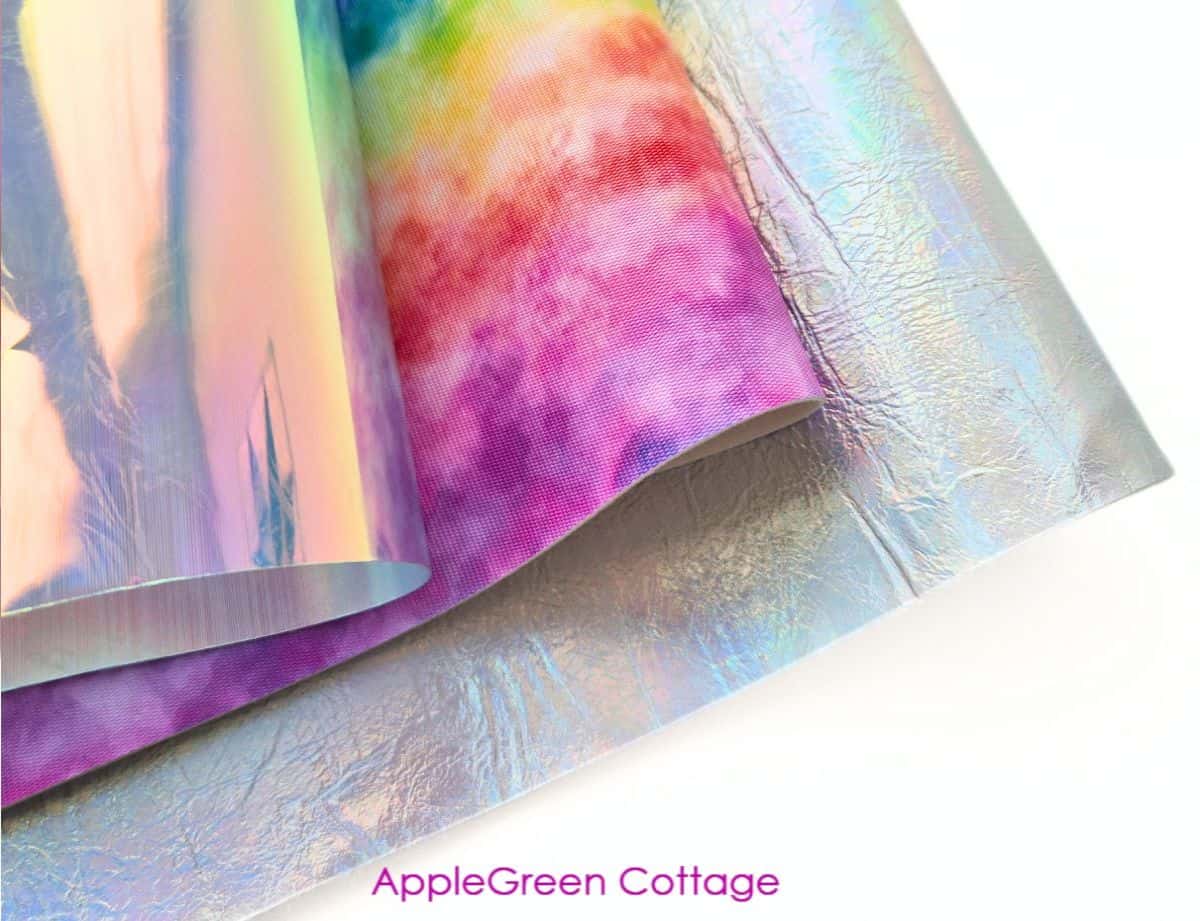
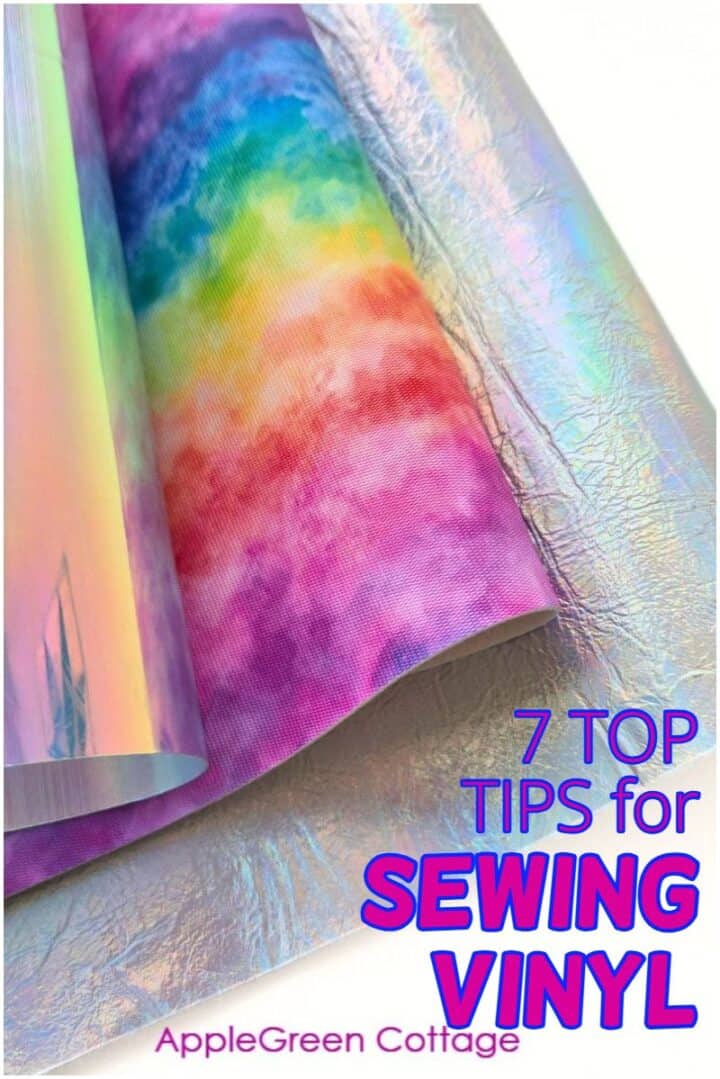
- Glitter / Metallic / Printed Vinyl - decorative finishes for accents.
- Clear Vinyl (PVC) - ideal for pockets, windows, organizers.
- TPU Vinyl - softer, flexible, and easier to sew than stiff PVC.
- also adding: Faux Leather (PU or PVC) - part of the upholstery family; PU is softer, PVC is firmer, usually a mix of both. It can sometimes be super close to vinyl, other times, it can feel like genuine leather - this is why I'm adding it here.
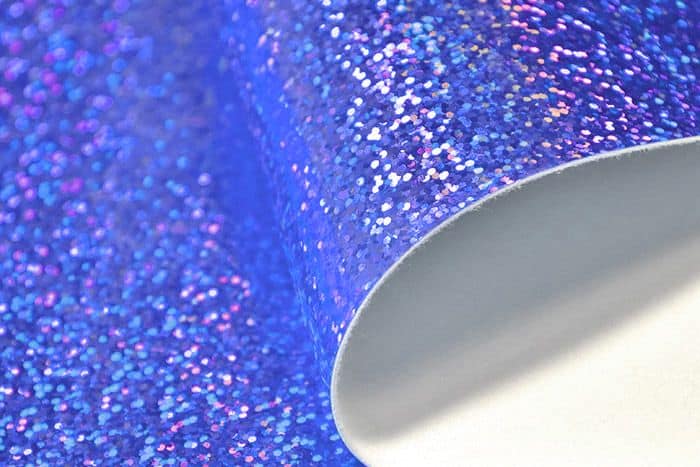
Working with vinyl or faux leather feels tricky at first, but a couple of small adjustments make them sew smooth and easy on a regular sewing machine. See the tips!
Tips List 1-6
Let's start with the biggest troublemaker: fixing dragging fabric and skipped stitches:
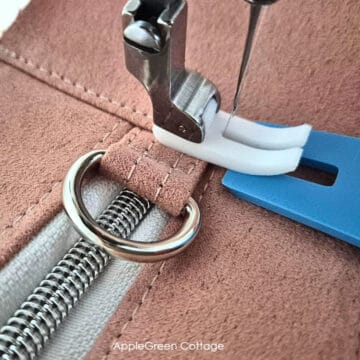
1 - Use a Teflon foot
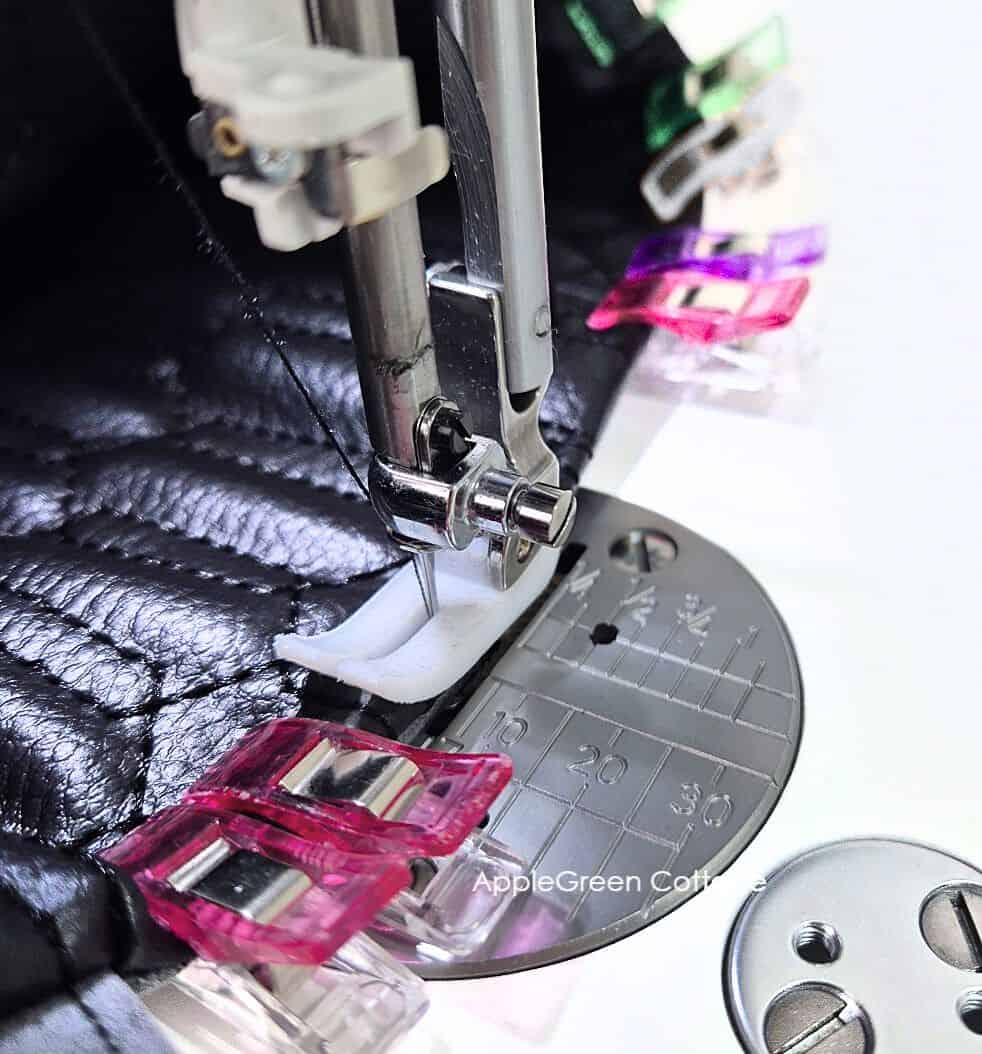
Vinyl can be sticky and tends to drag under a regular presser foot. Switching to a Teflon helps it glide smoothly - and keeps your topstitching neat, especially when you're new to sewing vinyl.
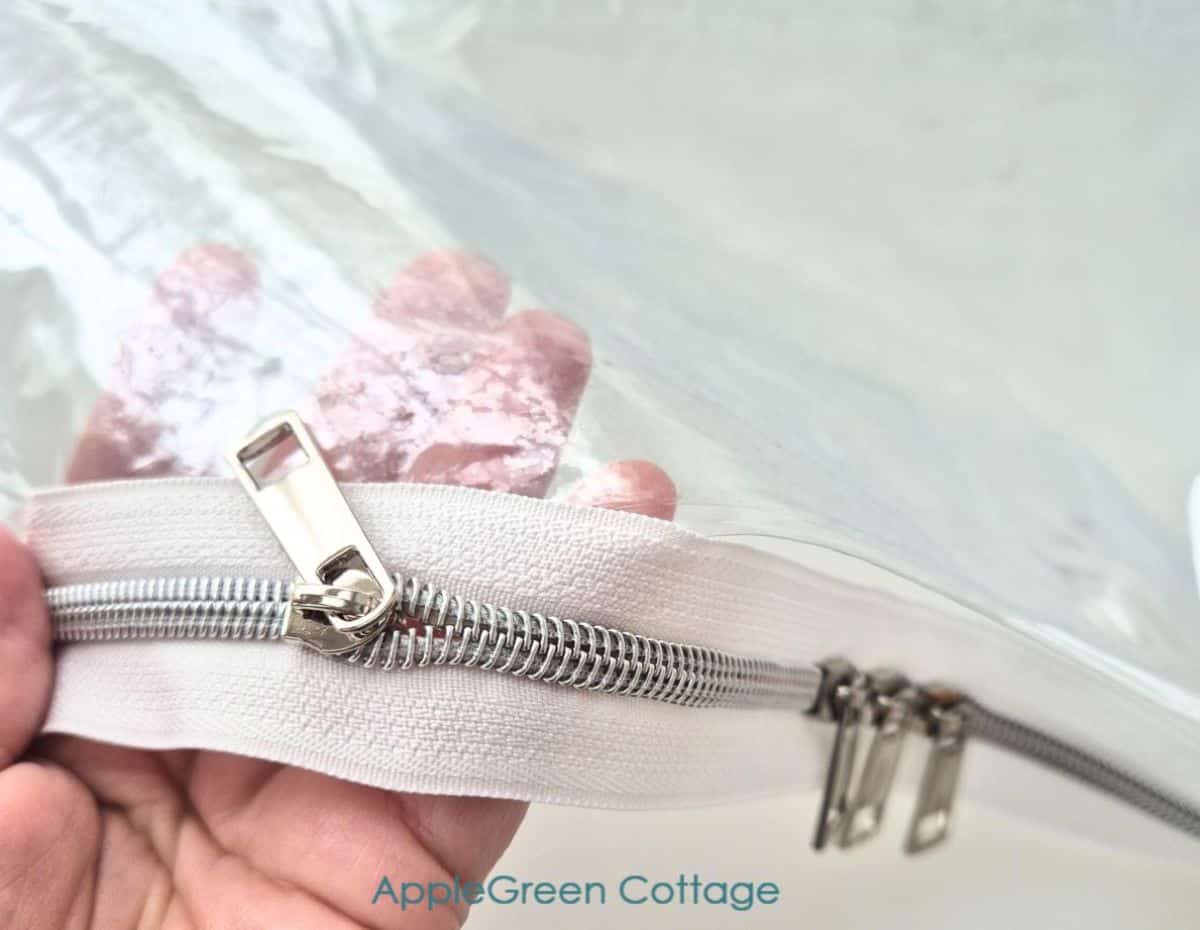
(↑ my transparent vinyl - so sticky!) Some faux leathers behave better, others less - this one was somewhere in between:
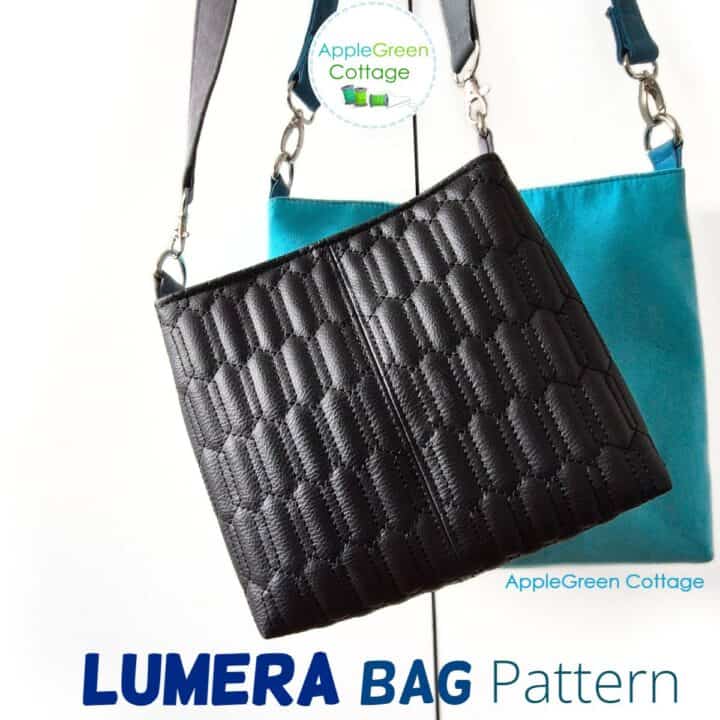
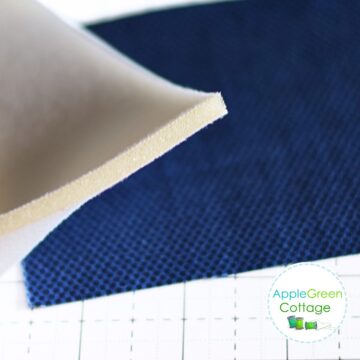
This is my Lumera pattern, and just for fun, I made the smallest version with a foam-backed, quilted faux leather - on my Janome HD9.
Sew this EASY Bag!
Quick fix: For a one-off project, a strip of tape on the underside of a regular presser foot can help. But if you enjoy bagmaking, a Teflon foot is a real game changer.
Xtra Tip: when sewing with my domestic machines (Elna and Janome HD1800), I usually prefer a walking foot to a teflon one. No skipped stitches there!
2 - Lengthen your stitches
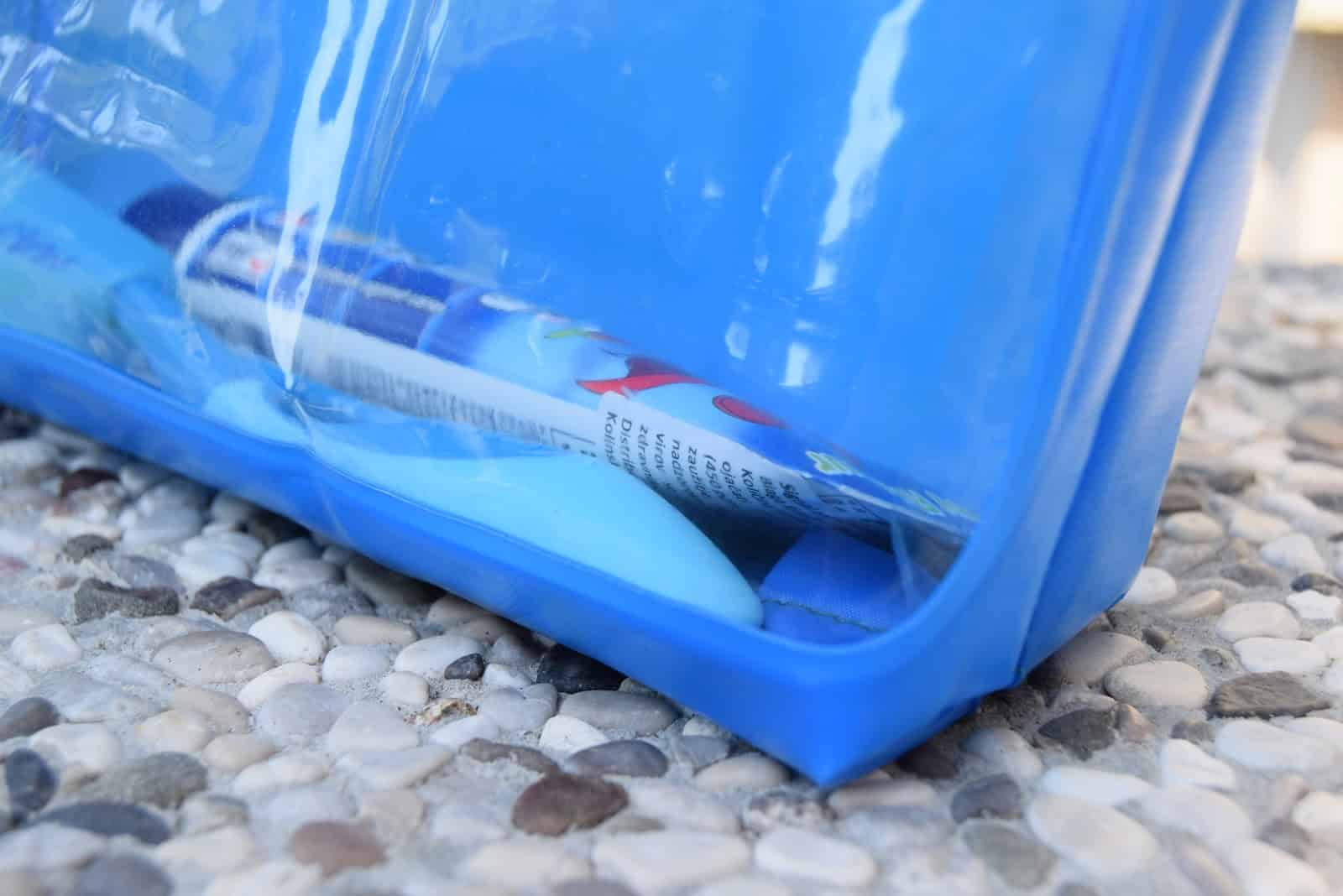
I use the longest stitch length my machine allows. Why? Several reasons: vinyl and faux leather can be a bit 'grabby', so your usual stitch length will turn out smaller. Second reason: the longer stitch length will keep your vinyl from perforating. Also, longer stitches look way prettier!
3 - Adjust your tension (usually up a little)
Thicker vinyl + thicker thread = more resistance. Increase tension until the stitch knot sits in the middle of your layers. For me, this usually takes a few trials and errors, especially when I get new materials to sew with.
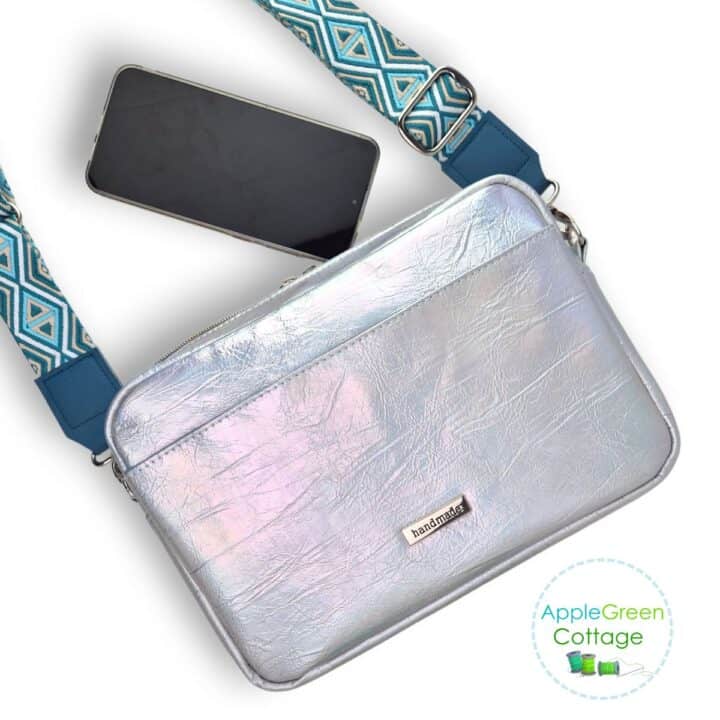
Sew this Crossbody Bag!
Always use polyester thread, not 100% cotton, because poly helps a lot with strength.
4 - Choose a larger needle
After a frustrating row of skipped stitches, I swapped in a bigger needle - and suddenly everything worked. Since then, I always keep a pack of 90/14Schmetz denim needles handy 🙂
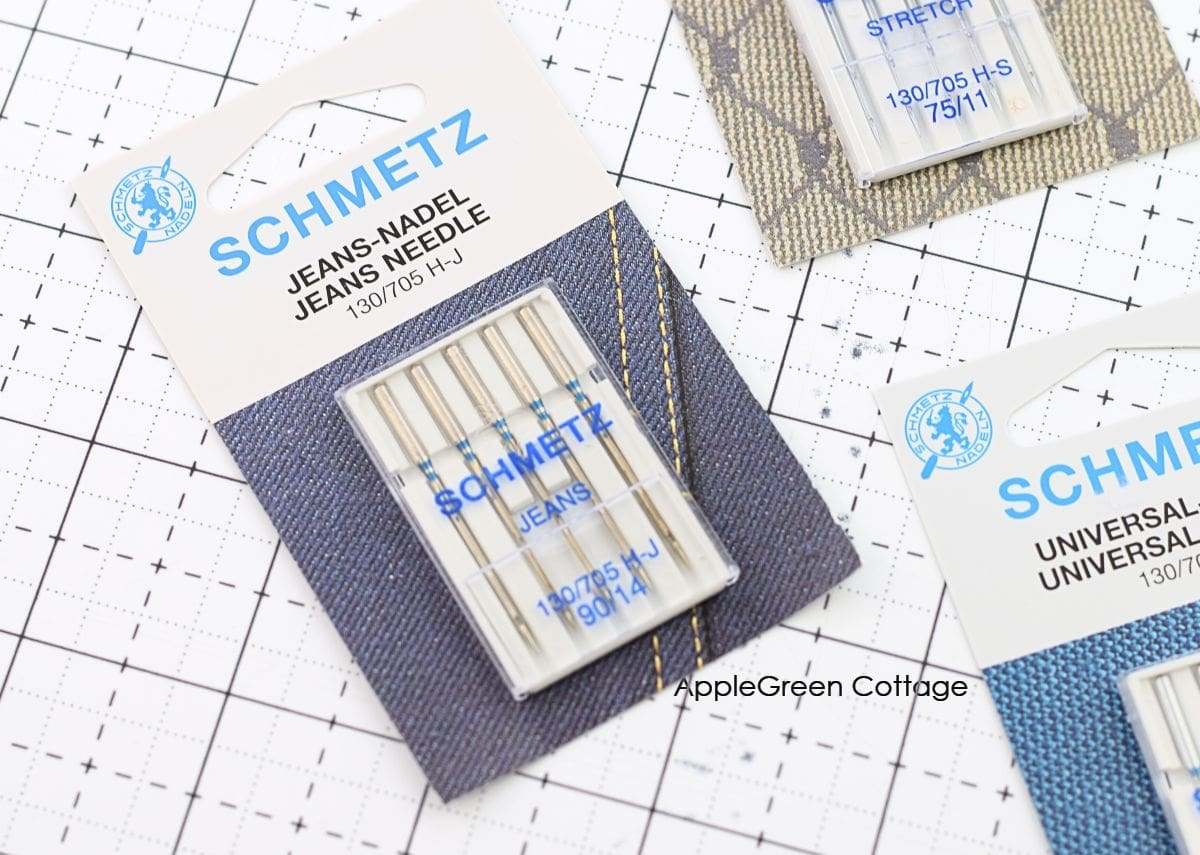
A larger needle helps thicker thread pass through vinyl without shredding and cuts down on skipped stitches. Many bagmakers like Microtex (sharp) or Jeans/Denim Schmetz needles for vinyl/faux leather. I use the latter; 90/14 Schmetz denim needle is my favorite brand and size for bagmaking.
5 - Use clips, not pins
Use clips instead of pins - vinyl and faux leather keep every hole forever. (I avoid pins anyway, here's what I use instead of pins.)
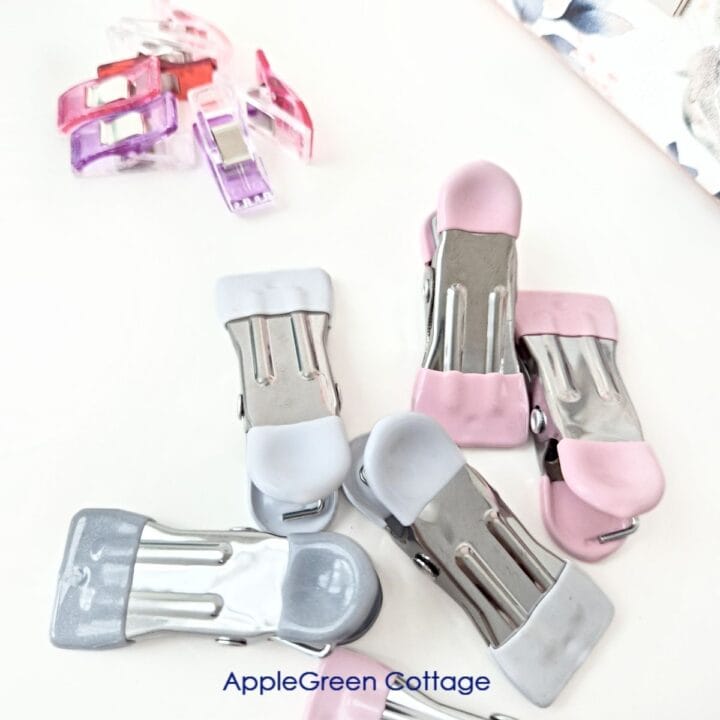
Sturdy Bagmaking Clips I love
Vinyl and faux leather are pretty unforgiving when you need to unpick - you won't be able to hide all the holes from stitching if you need to redo a seam. If you need to resew a line of topstitching, follow the same holes so the seam stays clean.
How To Use Stabilizers with Vinyl and Faux Leather?
Grab the free cheatsheet - or do a deep-dive with the full Interfacing Guide PDF in our shop:
Want to go deeper?
What to do if you need to unpick the seam on vinyl?
No need to freak out, you just sew again, this time using a teeny tiny bit larger seam allowance. The holes from the unpicked seam won't be visible.
What to choose for a first vinyl sewing project?
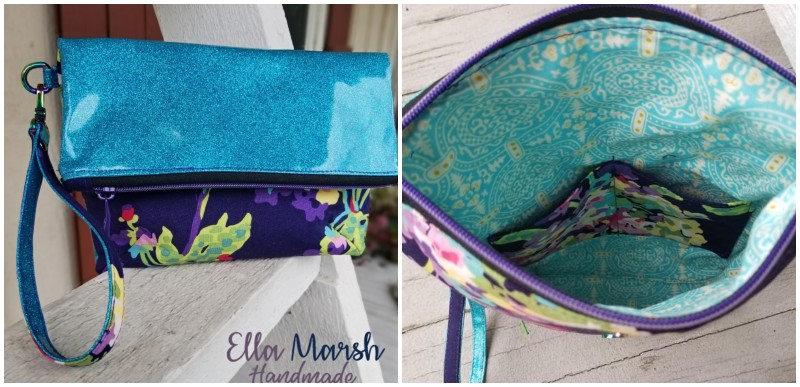
Never sewn with vinyl yet? Make a simple zipper pouch first, or even better, just use accents in faux leather as a first bag with faux leather, matching it with quilting cotton. (Properly interfaced, of course.) Here's some glossy vinyl that our pattern tester, Lorna @ella.marsh.handmade, used to make the SOPHIA clutch:
TOP TIP
When reinforcing a vinyl seam, sew a second line just a tiny bit beside the first one - never directly on top - so you don't perforate the vinyl.
6 - Add gentle heat if vinyl needs to soften
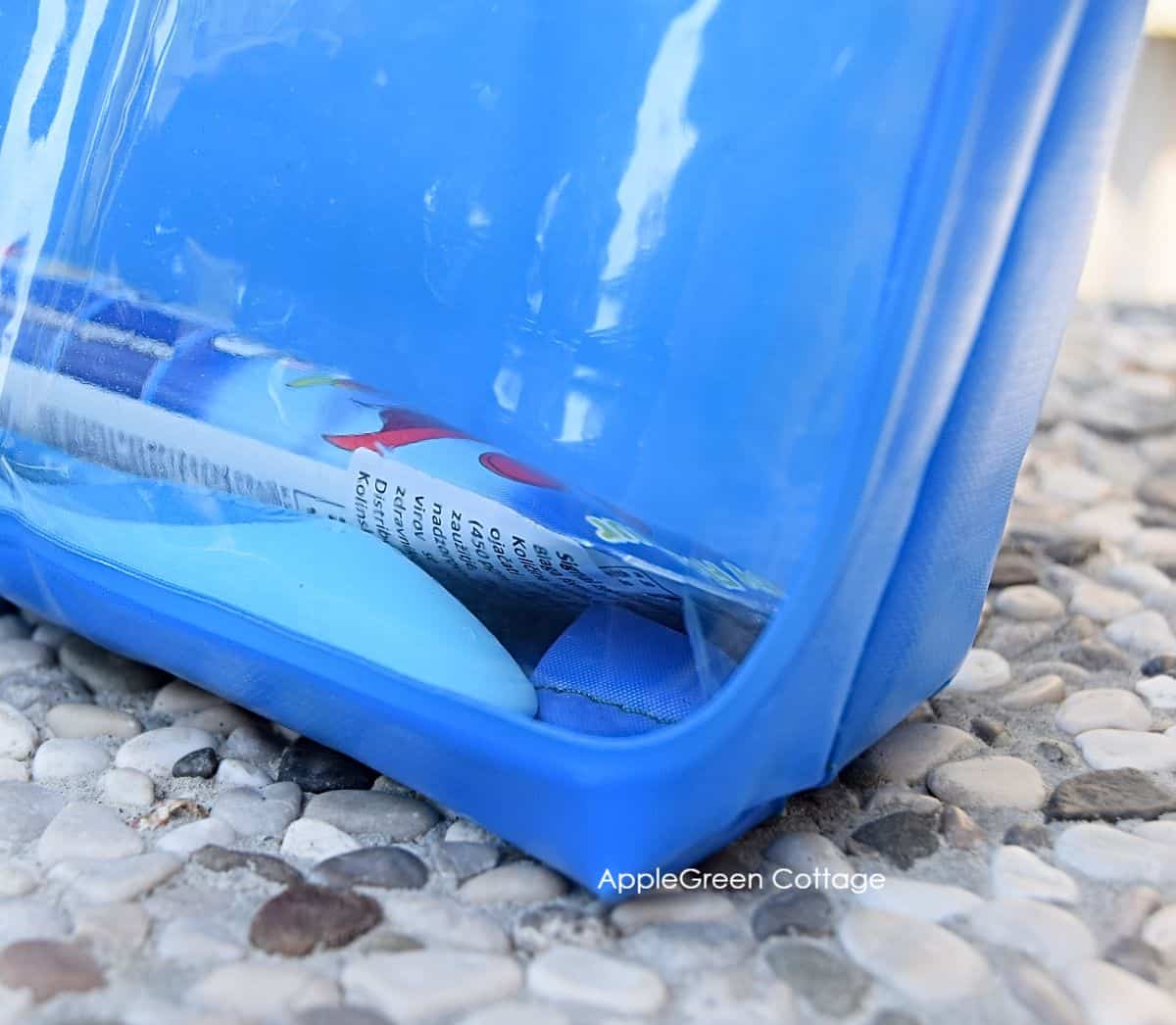
A quick pass with a hairdryer warms vinyl just enough to make it more pliable. It helps with turning bags right-side out and smoothing seams flat. A hairdryer is a life-saver for me when sewing with transparent vinyl like this toiletry pouch tutorial ↓
TOP TIP - Store vinyl rolled, not folded
Keeps creases away so your panels stay smooth (a big help for clean topstitching). More on how to store fabric.
7 - Test on scraps every single time
Different vinyls behave differently - some soft, some firm. A few test stitches let you dial in needle size, stitch length, and tension so your bag sews beautifully from start to finish.
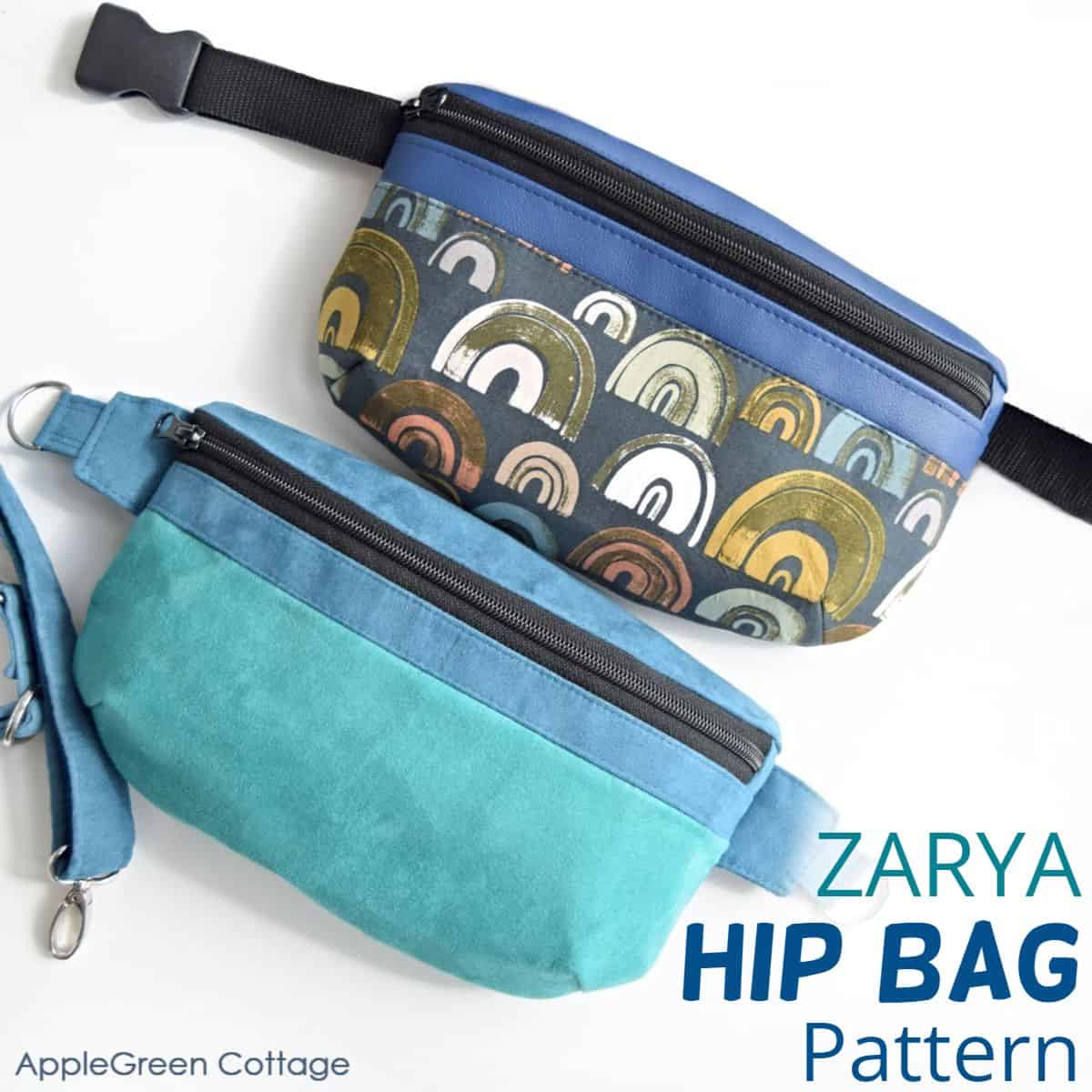
Check out the trending ZARYA Hip Bag pattern in our shop - perfect for carrying all your essentials - hands-free!
Vinyl vs Faux Leather - Quick Clarifier
Faux leather and vinyl often get grouped together, but they're not exactly the same. What is vinyl? Vinyl is PVC-based, usually a bit shinier and stickier to sew (you'll want that Teflon foot!).
What is faux leather? Faux leather is PU-based, comes in many weights, and usually looks more like real leather. Avoid the thickest faux leathers on a beginner machine and you'll have a much easier time.
If you are into bagmaking, make sure to check out my other bagmaking materials guide and tips that will make sewing bags easier, and even more enjoyable. Or join our free bagmaking email guide - super popular right now!
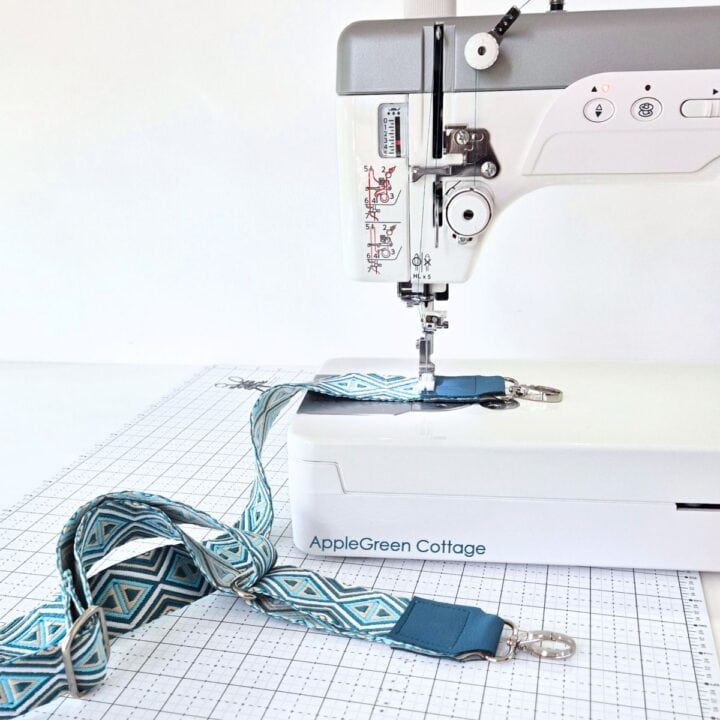
Is Janome HD9 for you?
The pros, cons & must-knows.
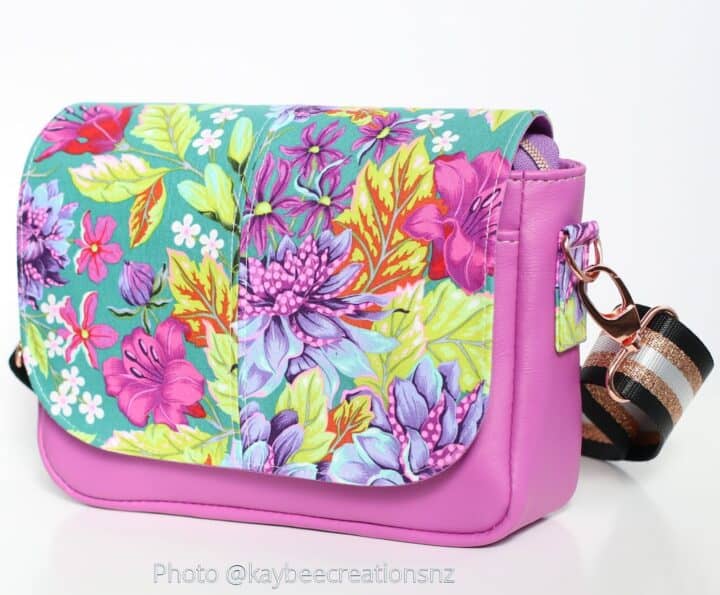
'A petite but mighty crossbody!'
tester bag by Karen @kaybeecreationsnz, ELARINA pattern
Patricia Magis says
Excellent information. Sure helped me.